What Two Continents Teach in One City: How Istanbul's Geographic Complexity Builds Sharper American Leaders
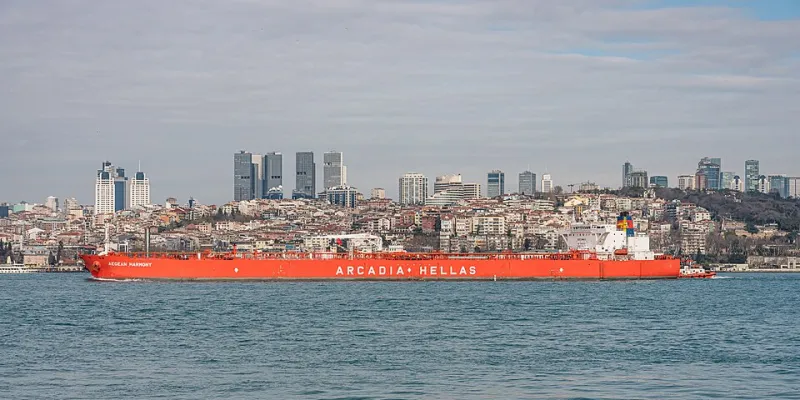
Photo: A.Savin, FAL, via Wikimedia Commons
There is a moment most American professionals experience within their first week in Istanbul that no orientation document fully prepares them for. They have crossed the Bosphorus by ferry, attended a morning seminar in Beşiktaş, and scheduled an afternoon meeting in Kadıköy—only to realize that navigating between those two appointments requires more than a map. It requires a recalibration of assumptions about time, pace, institutional logic, and social expectation. That recalibration, repeated dozens of times over weeks or months, is precisely what Istanbul Akademisi has built its advanced leadership programs around.
The phenomenon is not accidental. It is geographic, structural, and deeply instructive.
A City That Refuses to Be Simplified
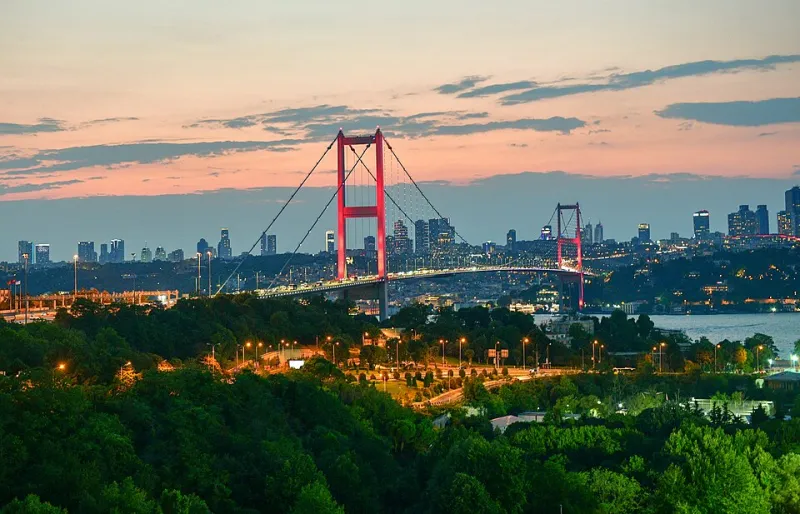
Most metropolitan training environments—New York, Chicago, Los Angeles—are complex in scale but relatively coherent in cultural grammar. The rules of professional engagement, however demanding, operate within a single dominant framework. Istanbul operates differently. The city is bisected by a body of water that has historically marked the boundary between civilizations, and that division continues to shape how neighborhoods function, how business relationships are initiated, and how authority is communicated across a conference table.
The European side carries the weight of Ottoman administrative tradition and a cosmopolitan, westward-facing professional culture. The Asian side—Anatolia in its most immediate urban expression—moves at a different cadence, reflects different social priorities, and responds to different conversational registers. Neither side is monolithic, and neither maps cleanly onto American professional expectations. Together, they form a working environment that is, by its very nature, a study in managed contradiction.
For American leaders accustomed to standardizing processes across distributed teams, this contradiction is not a distraction. It is the most honest simulation of contemporary organizational reality they are likely to encounter in a structured learning context.
What Cognitive Flexibility Actually Looks Like Under Pressure
Leadership development literature has long emphasized the importance of cognitive flexibility—the capacity to shift mental frameworks in response to changing context. What that literature rarely addresses is the mechanism through which that flexibility is built. Reading case studies about adaptive leadership and actually practicing it are separated by an enormous experiential gap.
Istanbul closes that gap by making adaptation structurally unavoidable. Professionals navigating the city's dual business ecosystems are not asked to imagine a scenario in which cultural codes shift mid-negotiation. They live that scenario daily. A morning spent working through a formal procurement discussion with a European-side firm, followed by an afternoon building rapport with a family-owned enterprise in Üsküdar, requires the kind of real-time code-switching that no workshop exercise can manufacture.
Participants in Istanbul Akademisi's leadership programs consistently report that this environmental pressure accelerates a specific kind of meta-cognitive development: the ability to observe their own assumptions in real time, identify when those assumptions are causing friction, and adjust without abandoning their core professional identity. That is not a soft skill. It is a precision instrument for leading fragmented, multicultural teams—which describes the majority of mid-to-large American organizations today.
The Logistics of Complexity as a Classroom
There is a second, less discussed dimension to Istanbul's pedagogical power: its logistical demands. The city is vast, its infrastructure is layered across centuries of development, and its transportation systems—while extensive—require active problem-solving rather than passive navigation. Getting from one professional obligation to another in Istanbul is rarely a matter of opening a ride-share app and waiting.
This is not a complaint. For professionals in leadership development programs, the logistical texture of daily life in Istanbul functions as a low-stakes rehearsal for high-stakes organizational management. Sequencing appointments across the Bosphorus requires anticipating delays, building buffer into plans, and communicating proactively with stakeholders when circumstances shift. These are, precisely, the operational habits that distinguish effective executives from reactive ones.
American professionals who have managed remote teams across time zones will recognize the parallel immediately. The discipline of operating in a city that does not optimize for convenience produces a professional temperament that is better prepared for the friction inherent in managing distributed, cross-functional teams back home.
Cultural Codes as Structural Data
Beyond logistics, Istanbul's dual cultural identity offers something more intellectually substantive: a live demonstration that professional norms are not universal truths but contextual agreements. This is a lesson that American business culture, for all its sophistication, tends to underteach.
In the United States, directness is frequently coded as confidence, brevity as efficiency, and assertiveness as leadership. These are not wrong values—but they are values, not axioms. In Istanbul, relationship-building precedes transactional clarity. Patience in negotiation signals seriousness rather than weakness. Hierarchical deference in certain settings is not an obstacle to progress but a prerequisite for trust.
Professionals who absorb these distinctions—not merely as cultural curiosities but as evidence that effective communication is always audience-dependent—return to their American organizations with a more sophisticated model of influence. They stop asking how to get their message across and start asking what conditions need to be created for their message to land. That shift in question is the difference between a competent manager and a genuinely adaptive leader.
Why This Transfers Directly to American Organizational Life
The United States workforce is among the most demographically and culturally heterogeneous in the world, and that heterogeneity is accelerating. American organizations are increasingly composed of teams whose members bring fundamentally different assumptions about authority, communication, conflict, and collaboration. The leader who has only ever operated within a single cultural grammar—however fluently—is structurally underprepared for that environment.
Istanbul's value as a leadership development context is precisely that it does not allow professionals to remain within a single grammar. The city's geography enforces exposure, and that exposure, structured through Istanbul Akademisi's curriculum, becomes the foundation for a more versatile and durable professional capability.
Participants do not return home with a list of cultural tips. They return with a retrained instinct for reading context, a practiced tolerance for ambiguity, and a demonstrated ability to build credibility across difference. In the current American business environment, that combination is not merely valuable. It is increasingly rare.
The Bosphorus as a Professional Mirror
There is something instructive in the fact that the Bosphorus—the strait that gives this city its defining character—is not a barrier between two worlds but a connector. It is crossed constantly, in both directions, by people who have learned to hold both sides in mind simultaneously.
That capacity, to hold apparent opposites in productive tension rather than resolving them prematurely into false simplicity, is what Istanbul ultimately teaches its most attentive students. For American professionals who lead teams, manage complexity, and operate in organizations where the rules are always partly unwritten, it may be the most transferable skill available anywhere in the world.
Istanbul Akademisi exists at the intersection of that geographic reality and structured professional development. The city provides the conditions. The curriculum provides the framework. What participants bring home is something neither could produce alone.