When Asking Questions Becomes a Strength: How Turkish Workplace Culture Dismantles Imposter Syndrome

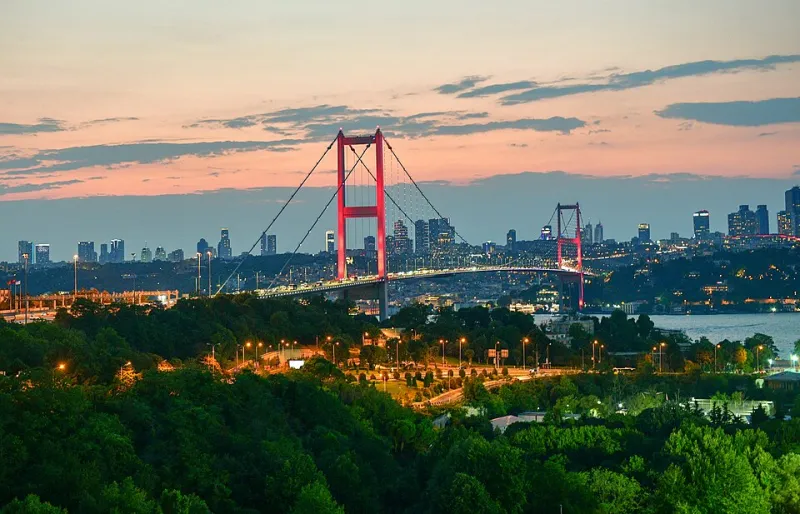
Photo by Photo by Cemrecan Yurtman on Unsplash on Unsplash
For many American professionals, imposter syndrome is a silent career tax — invisible, persistent, and deeply costly. It surfaces in the hesitation before speaking in a meeting, the compulsive over-preparation before a presentation, the quiet dread of being "found out" despite years of legitimate accomplishment. What they rarely expect is that the antidote might be found not in a therapist's office or a self-help book, but in the collaborative rhythms of a Turkish workplace in Istanbul.
This is not a trivial observation. It is a pattern that Istanbul Akademisi has documented across cohorts of American professionals who have engaged with our programs and subsequently immersed themselves in Istanbul's professional ecosystem. The results, consistently, point in one direction: working alongside Turkish colleagues reframes the entire psychological architecture of professional identity.
The American Confidence Paradox
The United States has built one of the world's most credential-intensive professional cultures. Degrees, certifications, performance reviews, LinkedIn endorsements — Americans are trained from early in their careers to measure worth through external validation. Paradoxically, this very system breeds fragility. When professional identity is anchored entirely to credentials and outcomes, any gap in knowledge or any visible mistake becomes existential rather than instructional.
Dr. Pauline Clance, who first named imposter syndrome in 1978, identified it most acutely in high-achieving individuals — precisely the population most likely to pursue advanced professional training abroad. The achievement-obsessed environment that produced their success also produced their self-doubt. Asking a question in an American boardroom can feel like an admission of inadequacy. Acknowledging uncertainty can feel career-limiting. The result is a culture of performed confidence that exhausts everyone who participates in it.
This is the environment many American professionals carry with them when they arrive in Istanbul.
A Different Professional Grammar
Turkish professional culture operates on a fundamentally different set of social assumptions. Rooted in values of collective learning, interpersonal respect, and long-term relationship building, Turkish workplaces tend to treat knowledge as something that is shared rather than hoarded, and questions as evidence of engagement rather than ignorance.
The concept of merak — a Turkish word that loosely translates as curiosity or intellectual wonder — carries genuine cultural prestige. Asking thoughtful questions is not merely tolerated in Turkish professional settings; it is often actively admired. Mentorship relationships are taken seriously, with senior professionals investing meaningfully in the development of their juniors rather than guarding their expertise as competitive advantage.
For an American professional conditioned to project certainty at all costs, entering this environment can feel disorienting at first. And then, gradually, liberating.
What the Research Suggests — and What Professionals Report
Social psychologists have long understood that imposter syndrome is heavily context-dependent. Environments that normalize mistakes, celebrate learning curves, and distribute acknowledgment broadly tend to reduce its symptoms significantly. Turkish professional culture, as experienced by American participants in Istanbul Akademisi programs, consistently exhibits these characteristics.
Marcus T., a product manager from Austin, Texas, described his experience after completing a leadership development program in Istanbul: "Back home, I never asked questions in meetings unless I already knew the answer. I thought that was professionalism. In Istanbul, I watched senior people — people with decades of experience — ask basic questions without any embarrassment. It rewired something in me. By week three, I was asking questions I'd been sitting on for years."
Similar accounts come from professionals across industries. Elena R., a financial analyst from Chicago, noted that her Turkish colleagues treated her visible learning process — including errors she made in cross-cultural communication — as entirely unremarkable. "Nobody performed surprise when I got something wrong. They just explained it and moved on. After a while, I stopped bracing for judgment every time I didn't know something. That was new for me."
These are not isolated anecdotes. They reflect a structural feature of Turkish workplace culture that has measurable psychological consequences for professionals who engage with it long enough to internalize its norms.
The Mentorship Factor
One of the most underappreciated dimensions of this dynamic is the quality of mentorship available within Istanbul's professional community. Turkish business culture places significant emphasis on hierarchical respect, but this hierarchy is typically expressed through guidance and investment rather than gatekeeping. Senior professionals in Istanbul frequently take time to explain context, share institutional knowledge, and offer perspective that would, in many American environments, be considered proprietary.
For American professionals accustomed to figuring things out independently — because asking for help signals weakness — this generosity can be genuinely destabilizing in the best possible sense. It removes the pressure to perform omniscience. It creates space for the kind of honest professional development that credential accumulation alone cannot produce.
Istanbul Akademisi structures its programs with this dynamic deliberately in mind. By pairing participants with local professionals and facilitating genuine workplace immersion, we create the conditions under which this psychological recalibration becomes possible. The classroom matters, but the cultural environment surrounding it does the deeper work.
Geography as Psychological Intervention
There is something specific about distance that matters here. Imposter syndrome is, in part, a social phenomenon — it is sustained by the presence of the same peers, the same institutional hierarchies, and the same performance expectations that originally generated it. Relocating to Istanbul, even temporarily, breaks that feedback loop.
In a new professional context, an American arrives without the accumulated social history that reinforces self-doubt at home. They are not the junior analyst who stumbled in the 2019 board presentation. They are simply a professional with a particular skill set, encountering new colleagues who have no preconceived framework for evaluating them. This anonymity, combined with the cultural norms described above, creates a rare window for identity reconstruction.
Professionals who take advantage of this window — who genuinely engage with Istanbul's workplace culture rather than merely observing it from a distance — frequently return to the United States with a qualitatively different relationship to their own professional identity. Not because they acquired new credentials, but because they experienced a different way of being a professional.
The Lasting Effect
The confidence gains reported by American professionals who train in Istanbul are not simply the product of novelty or temporary distance from familiar stressors. They appear to be durable. Participants consistently describe carrying new behavioral patterns home: asking questions more readily, tolerating ambiguity more comfortably, and investing more genuinely in the development of colleagues rather than competing with them.
This is the paradox the headline names: it is not working with people who share your insecurities that resolves imposter syndrome. It is working with people who do not recognize the game you have been playing — and who invite you, without fanfare, to stop playing it.
At Istanbul Akademisi, we believe that professional education is not only about the transfer of skills. It is about the transformation of the professional self. Istanbul's workplace culture, with its emphasis on curiosity, mentorship, and collective growth, is one of the most effective environments we know for accomplishing precisely that.
For American professionals who have achieved a great deal and yet remain unconvinced of their own legitimacy, Istanbul may offer something no domestic training program can: a genuinely different mirror.