Where You Learn Changes What You Learn: The Strategic Case for Geography in Professional Education
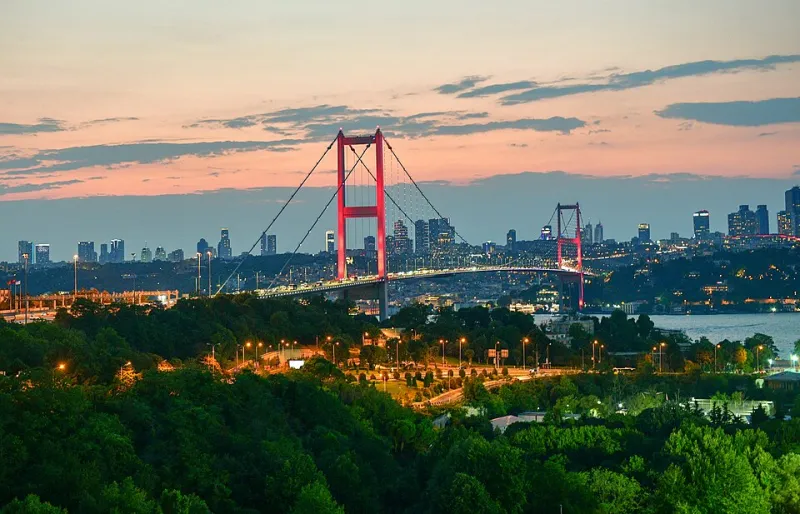
Photo: Huseyinakbas63, CC BY 4.0, via Wikimedia Commons
Most conversations about professional development focus on curriculum, credentials, and instructors. Far fewer ask a question that turns out to matter enormously: where does the learning happen, and does that location itself carry instructional weight?
For American professionals considering their next career investment, this question deserves serious attention. Istanbul Akademisi has observed, across years of working with international learners, that the city of Istanbul does not merely serve as a setting for education. It functions as an active participant in it — one whose geographic identity quietly dismantles assumptions that most Western business training never thinks to challenge.
The Limits of the Single-Continent Mindset
American corporate training, for all its sophistication, tends to operate within a particular conceptual geography. Markets are domestic or foreign. Strategy moves in one direction at a time. Risk is something to be minimized before action is taken. These frameworks are not wrong — they are simply products of an environment in which most business relationships, regulatory structures, and cultural assumptions point in the same general direction.
Istanbul points in two directions simultaneously, and always has.
As a city that has served as a capital for three major empires and a commercial hub connecting the Black Sea to the Mediterranean, Istanbul carries within its urban fabric a centuries-long record of managing contradiction productively. Byzantine and Ottoman architecture share the same skyline. European and Middle Eastern business customs coexist in the same negotiating rooms. The Bosphorus Strait, which runs directly through the city, is not a border so much as a living demonstration that two distinct worlds can occupy the same space without resolution — and that this tension, rather than being a problem, is often the source of the city's greatest commercial creativity.
For professionals trained to seek consensus and clarity before moving forward, this environment is initially disorienting. That disorientation, it turns out, is precisely the point.
Cognitive Flexibility as a Learnable Skill
Research in organizational psychology has increasingly identified cognitive flexibility — the capacity to hold multiple, sometimes contradictory frameworks simultaneously — as one of the distinguishing characteristics of effective global leaders. It is the ability to understand why a negotiation strategy that works in Chicago will land differently in Riyadh, and to adjust not just tactics but underlying assumptions in real time.
This skill is difficult to teach in a classroom in which everyone shares the same cultural reference points. It becomes far more accessible when the classroom itself sits at a cultural intersection.
At Istanbul Akademisi, participants in professional development programs frequently report a specific kind of perceptual shift that occurs not during formal instruction, but during the intervals between it — while navigating the city's two-continent transit system, conducting business conversations that blend English, Turkish, and occasionally a third language, or simply observing how a single urban environment accommodates deeply divergent ways of conducting daily life. The formal curriculum provides frameworks. The city provides the lived evidence that those frameworks are genuinely necessary.
This is what might be called the Bosphorus Effect: the way in which geography, when it is genuinely bifurcated, trains the mind to bifurcate as well — to hold east and west, tradition and innovation, caution and ambition in productive parallel rather than forcing a premature choice between them.
Why American Professionals Feel It Differently
It would be inaccurate to suggest that geography affects all learners identically. The Bosphorus Effect tends to register most sharply for professionals whose prior training has been most thoroughly monocultural — and American business education, despite its many strengths, often qualifies.
The United States produces exceptional business leaders by nearly any measure. Its MBA programs, executive training institutes, and corporate development functions are globally respected. What they are less equipped to provide is genuine exposure to the experience of operating in an environment where the dominant logic is not American, where relationship-building timelines differ, where the concept of institutional trust is constructed differently, and where market assumptions that feel universal turn out to be regional.
American professionals who arrive in Istanbul for professional training often describe an early phase of mild productive confusion — a sense that the mental models they rely upon are functioning, but not quite as efficiently as usual. This is not a failure of competence. It is the first sign that new cognitive infrastructure is being built.
By the middle stages of most Istanbul Akademisi programs, participants typically report a qualitative change in how they approach problem-solving: a greater willingness to entertain competing interpretations, a reduced urgency to reach premature conclusions, and a more nuanced reading of the relational dimensions of professional situations. These are not abstract virtues. They are measurable advantages in international negotiations, cross-border team management, and market entry strategy.
The Replication Problem
A reasonable question follows: can these benefits be replicated through curriculum design alone, without the geographical component? Could an American institution simply incorporate more cross-cultural content into its existing programs and achieve comparable outcomes?
The evidence suggests not — or at least not fully. The psychological literature on embodied cognition indicates that learning which occurs in a novel physical and cultural environment encodes differently than learning that occurs in a familiar one. The brain, when it is navigating genuine novelty, is more alert, more integrative, and more likely to form durable new associations. A case study about Istanbul's role in East-West trade, read in a Boston conference room, activates different neural pathways than the same conceptual insight arrived at while standing on a bridge that literally connects two continents.
This is not mysticism. It is the straightforward consequence of how human learning systems evolved — in environments, not in the abstract.
Istanbul Akademisi's programs are designed with this reality in mind. The curriculum is rigorous and internationally benchmarked. But it is also deliberately situated — structured to take advantage of the city's unique capacity to make abstract concepts about global complexity feel immediate, navigable, and personally relevant.
A Different Kind of Professional Return
American professionals evaluating training investments naturally think in terms of return: What credential will I earn? What skill will I add? What salary increase might follow?
These are legitimate questions, and Istanbul Akademisi's programs are designed to answer them with specificity. But professionals who have completed training in Istanbul frequently describe an additional category of return that they did not anticipate when they enrolled — a shift in the quality of their professional judgment, a broader tolerance for ambiguity, and a more sophisticated understanding of how geography, culture, and market logic intersect.
These are not soft outcomes. In a global economy in which American companies increasingly depend on international markets, partnerships, and talent pipelines, the ability to think in multiple dimensions simultaneously is among the most valuable professional assets available.
Geography, it turns out, is not just where learning happens. In Istanbul, it is part of what is being learned.