Disconnected to Perform: How Istanbul's Digital Friction Is Sharpening the Focus of American Professionals

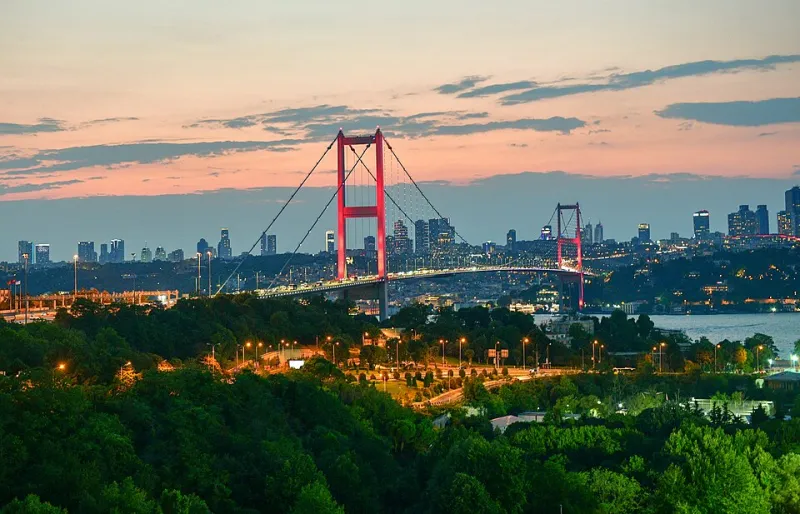
Photo by Photo by Cemrecan Yurtman on Unsplash on Unsplash
The Problem With Frictionless Connectivity
American professionals live inside one of the most optimized digital ecosystems ever constructed. Fiber-optic speeds, seamless cloud access, and always-on notifications have eliminated nearly every moment of involuntary pause from the modern workday. On the surface, this sounds like progress. In practice, for many knowledge workers, it has become a quiet crisis of attention.
The ability to sustain focused thought—what cognitive researchers often call deep work—is increasingly rare in environments designed to reward constant responsiveness. Every notification accepted, every tab opened reflexively, every Slack message answered within seconds represents a small but measurable withdrawal from the brain's capacity for concentrated reasoning. Over time, the cumulative effect is significant: professionals become faster at surface-level tasks and progressively worse at the kind of strategic, complex thinking that drives career advancement.
This is the context in which Istanbul's digital infrastructure, often cited as a limitation by visiting professionals, begins to look like something else entirely.
What Professionals Actually Experience in Istanbul
American participants in Istanbul Akademisi's professional development programs frequently arrive with a common set of assumptions. They expect world-class instruction, an intellectually stimulating environment, and the same seamless digital experience they have at home. What they often encounter instead is a city where internet connectivity, while functional, operates with more variability than they are accustomed to—slower load times, occasional service interruptions, and a general rhythm that does not cater to the reflexive digital habits formed over years of American broadband culture.
The initial reaction, predictably, is frustration. Professionals accustomed to instantaneous access find themselves pausing, waiting, and—crucially—thinking in the gaps that emerge.
What many report afterward is something they did not anticipate: those gaps became productive. The forced interruption of the scroll-and-respond cycle created space for reflection that their home environments had effectively engineered out of existence. Assignments that would have been completed quickly and superficially at home were instead approached with greater deliberation. Reading material was processed rather than skimmed. Problems were turned over mentally before solutions were reached for.
The Cognitive Science Behind the Phenomenon
This experience is not incidental. It aligns closely with established research on attention, cognitive load, and the conditions under which the brain performs its most sophisticated work.
Neuroscientists and organizational psychologists have long documented that the human brain does not multitask—it task-switches, and each switch carries a measurable cost in time, accuracy, and mental energy. High-speed, always-connected environments encourage this switching at rates that would have been unimaginable to previous generations of professionals. The result is a workforce that is, in many respects, chronically distracted while believing itself to be highly productive.
Environments that introduce what researchers call "desirable difficulties"—conditions that slow processing without impairing comprehension—have been shown to improve retention, analytical depth, and creative problem-solving. Istanbul's digital friction functions, unintentionally, as precisely this kind of desirable difficulty. It slows the reflex without eliminating the capability, creating conditions in which deeper cognitive engagement becomes not just possible but necessary.
Istanbul as an Unintentional Deep Work Laboratory
Istanbul Akademisi has observed this pattern consistently across its professional cohorts. Participants in multi-week programs—whether focused on leadership development, cross-cultural business strategy, or technical skill acquisition—routinely describe a shift in their working style that begins within the first several days of their time in the city.
The shift is rarely dramatic. It is not a sudden transformation but a gradual recalibration. Professionals begin structuring their work sessions differently, batching communication rather than responding in real time, and approaching complex material with a patience they had not realized they had lost. By the midpoint of a program, many describe their engagement with coursework as qualitatively different from anything they experience in their American professional environments.
What makes Istanbul particularly well-suited to this recalibration is not digital friction alone. The city itself—its layered history, its geographic position between two continents, its cultural depth—provides an intellectual stimulus that complements the slower digital pace. There is simply more to think about, and the environment supports the kind of unhurried observation that feeds strategic thinking.
Translating Istanbul's Focus Back to the American Workplace
The more consequential question for American professionals is not what happens in Istanbul but what they bring home.
Participants who complete programs at Istanbul Akademisi consistently report that the attentional habits developed during their time abroad do not disappear upon returning to American connectivity. Having experienced extended periods of productive focus, they become more intentional about recreating those conditions at home—turning off notifications during designated work blocks, establishing boundaries around synchronous communication, and approaching complex tasks with the deliberate patience their Istanbul experience normalized.
In practical terms, this translates into measurable professional improvements: more thorough analysis, better-constructed arguments, stronger written communication, and an increased capacity to engage with ambiguous or multi-dimensional problems. These are precisely the skills that distinguish senior contributors from their peers in American corporate environments, and they are skills that no amount of professional development training explicitly teaches. They emerge from the experience of sustained, uninterrupted thought—an experience that Istanbul, paradoxically, makes easier than most American cities do.
Reframing Infrastructure as Curriculum
It would be an overstatement to suggest that slower internet speeds are a feature rather than a limitation. Istanbul's digital infrastructure reflects real developmental gaps that the city and country are actively working to address. The point is not that friction is inherently valuable but that American professionals have become so thoroughly adapted to frictionless environments that even modest resistance produces meaningful cognitive benefits.
For professionals considering an immersive learning experience abroad, this reframing matters. The question is not only what courses to take or what credentials to earn but what conditions of learning will produce the most durable professional transformation. Istanbul Akademisi's programs are designed with this in mind—not by engineering obstacles, but by operating within a city whose natural rhythms invite a different relationship with time, attention, and intellectual effort.
In an era when sustained focus has become one of the rarest and most valuable professional assets, the city that teaches you to slow down may be the one that helps you move furthest ahead.