The Two-Week Investment Your CFO Won't Regret: Rethinking the Corporate Learning Budget
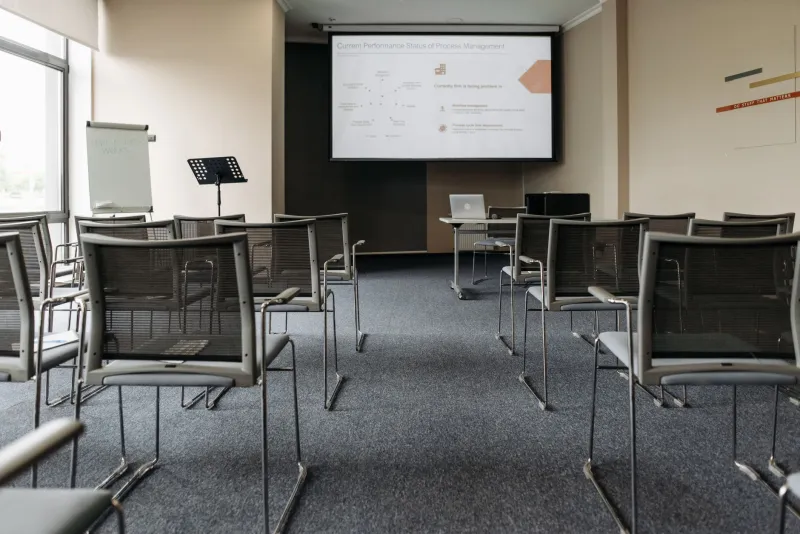
Every October, mid-sized American companies send their rising managers somewhere warm for three days of trust falls, keynote speeches, and a hotel ballroom workshop on "emerging leadership." The invoice typically lands between $3,000 and $6,000 per person once travel, facilitation, and lost productivity are tallied. What arrives back at the office on Monday? Usually a binder, a few energized employees, and — within six weeks — almost nothing traceable.
There is an alternative hiding in plain sight, and it costs less while producing more.
The Arithmetic of the Offsite
Consider a typical comparison. A three-day domestic leadership retreat for one employee: roughly $4,500 all-in. A two-week intensive professional training program in Istanbul — accredited coursework, assessed projects, cross-cultural collaboration with an international cohort — generally runs $2,500 to $4,000 including accommodation.
The retreat purchases inspiration. The intensive purchases capability. And capability is the only one of the two that shows up on a performance review.
Learning science backs the distinction. Skills acquired in short, high-intensity bursts with immediate application — the structure of an immersion program — show dramatically better retention than content delivered in a single passive sitting. The retreat model violates nearly every principle of durable learning: no spacing, no retrieval practice, no assessment. The sprint model is built around all three.
What "Measurable" Actually Looks Like
When HR leaders evaluate training ROI, they should demand artifacts, not testimonials. A well-designed intensive program produces:
- A completed, assessed project relevant to the employee's actual role
- A verifiable certification with an examination component
- Pre- and post-program skill benchmarks the employee can retake at home
- A professional network spanning multiple markets — an asset no ballroom workshop generates
Ask a retreat vendor for any of these and the conversation goes quiet.
The Framework: Pitching the Line Item
HR teams serious about this shift need to speak the CFO's language. Structure the proposal in four moves:
1. Frame it as replacement, not addition. The ask is reallocation of the existing offsite budget, not new spend. Same envelope, better yield.
2. Attach a retention metric. Present the 30-, 60-, and 90-day skill benchmarks the program provides. Commit to reporting them. No vendor of trust falls will offer the equivalent.
3. Quantify the network externality. An employee who returns with working relationships in a market spanning Europe, the Middle East, and Central Asia carries option value for any company with international ambitions — often the very reason the offsite exists in the first place.
4. Pilot with a cohort of three. CFOs rarely reject a bounded experiment. Three employees, one program, defined metrics, a 90-day readout. If the data disappoints, the budget returns to the ballroom.
The Deeper Point
American companies do not have a morale problem they can retreat their way out of. They have a capability problem, and capability is built through structured, assessed, immersive practice — the kind Istanbul's training academies have refined over decades of serving students from dozens of countries.
The Bosphorus has watched empires invest in the wrong things before. It is a patient teacher. The companies that learn from it early will be the ones whose people come back measurably better — not just momentarily energized.