Show Me the Work: What Istanbul's Craft Tradition Gets Right About the Credentialing Crisis
Something quiet but consequential is happening in American hiring. Job postings that once demanded a bachelor's degree increasingly read "degree preferred" or omit the requirement entirely. Companies like IBM, Google, and Walmart have formally restructured large portions of their hiring around demonstrated skills. Surveys show a majority of employers doubt that a four-year degree reliably signals job readiness.
The degree is not dead, but its monopoly is. And into the vacuum is rushing a question that higher education has spent decades avoiding: if not the diploma, then what?
The Problem With Paper
The bachelor's degree was a useful signal when it was scarce. Today, more than a third of American adults hold one, and grade inflation plus uneven program quality have eroded what it communicates. Employers know this. Job seekers increasingly know it too — which is why certificate enrollments and skills bootcamps have grown even as traditional graduate program numbers soften.
But the alternatives have their own credibility problem. A certificate that required only a credit card proves nothing. The market is drowning in credentials and starving for evidence.
The Old Answer to a New Question
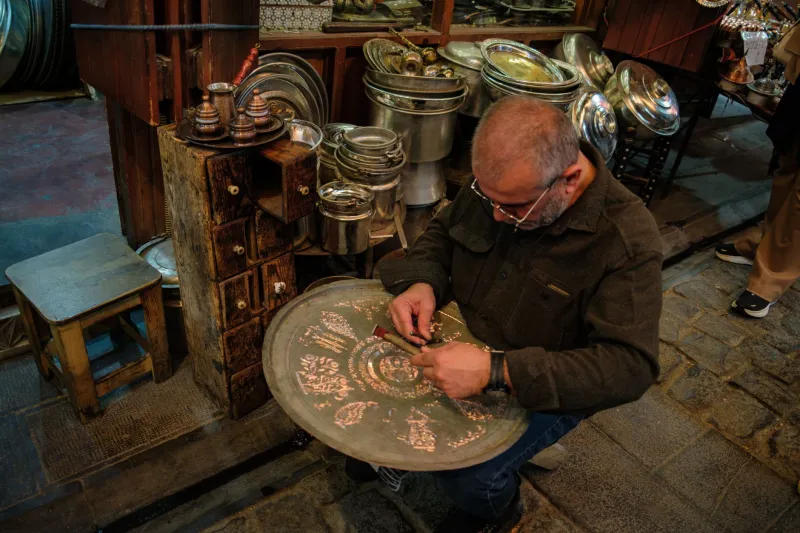
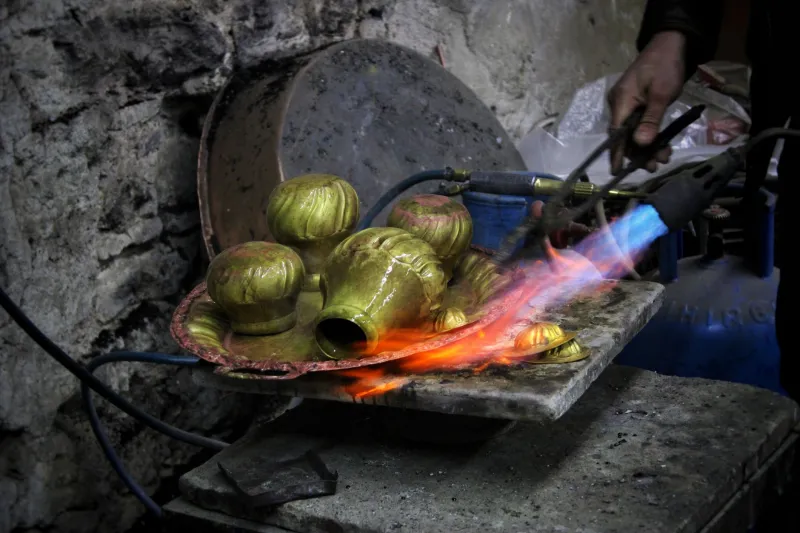
Istanbul's training tradition never had this confusion, because it was never built around paper. The city's guilds, ateliers, and academies operated on a simple principle: the work is the credential. An apprentice's progress was measured in things made, problems solved, and judgments rendered by masters who inspected the output directly.
That model maps almost perfectly onto what modern skills-based hiring is trying to become. The essential ingredients are the same:
-
Assessed output, not attendance. Completion means a project passed evaluation, not hours logged.
-
External verification. Someone with authority to judge competence actually judged it.
-
Artifacts a third party can inspect. The portfolio speaks to the next employer without the academy in the room.
What a Credible Intensive Credential Looks Like
For American professionals weighing short-form international programs, the vetting question is always the same: what can I show at the end? Strong intensive programs in Istanbul structure themselves around exactly this. The credible outputs include:
-
Portfolio projects completed under assessment — a working data analysis, a business plan, a designed product — reviewed and graded by instructors, suitable for a GitHub repo or a personal site.
-
Examination-based certificates in fields like language proficiency, where the CEFR-aligned result is verifiable by any employer worldwide.
-
Capstone presentations delivered to panels, with written evaluations the participant can share.
-
Documented cross-cultural project work — increasingly the differentiator for roles involving international teams, where a line on a résumé means less than a concrete example you can narrate in an interview.
The Portfolio Is the New Transcript
For the American job seeker, the strategic implication is straightforward. In a skills-based market, the question is no longer "where did you study?" but "show me what you made." A two-week or three-month intensive that produces assessed, inspectable work answers that question in a way a decade-old diploma cannot.
There is a certain symmetry in this. American hiring is only now arriving at a principle Istanbul's craft academies never abandoned: competence is demonstrated, not declared. The city that taught the world trade has been quietly teaching it verification all along. The professionals who internalize that lesson first will be the ones whose portfolios — not their paper — open the next door.