Five Hundred Years of Haggling: Why the Grand Bazaar Outclasses Any American Negotiation Seminar
The Limits of the Conference Room
Every American professional has sat through some version of it: the negotiation workshop with its laminated cheat sheets, its BATNA acronyms, its scripted role-plays where a colleague pretends to be a difficult vendor. Participants nod, take notes, and return to their desks armed with frameworks that somehow never survive contact with a real counterpart.
The problem is not the frameworks. It is the setting. Conference rooms are sterile environments where nothing is genuinely at stake. Nobody walks out of a role-play having actually lost money, face, or time. And so the lessons remain theoretical — filed away, rarely retrieved.
There is a place where the opposite is true. In Istanbul, at the edge of the old city, stands a market that has been in continuous operation since the fifteenth century. The Grand Bazaar processes hundreds of thousands of visitors a day, and every transaction within it is a negotiation conducted at full intensity, with real stakes, in real time. Increasingly, professional training programs are treating it not as a tourist stop but as what it genuinely is: perhaps the world's oldest functioning negotiation classroom.
Where Price Is a Conversation
The first thing American professionals notice in the bazaar is that price is not a number. It is a conversation with a beginning, a middle, and a mutual destination.
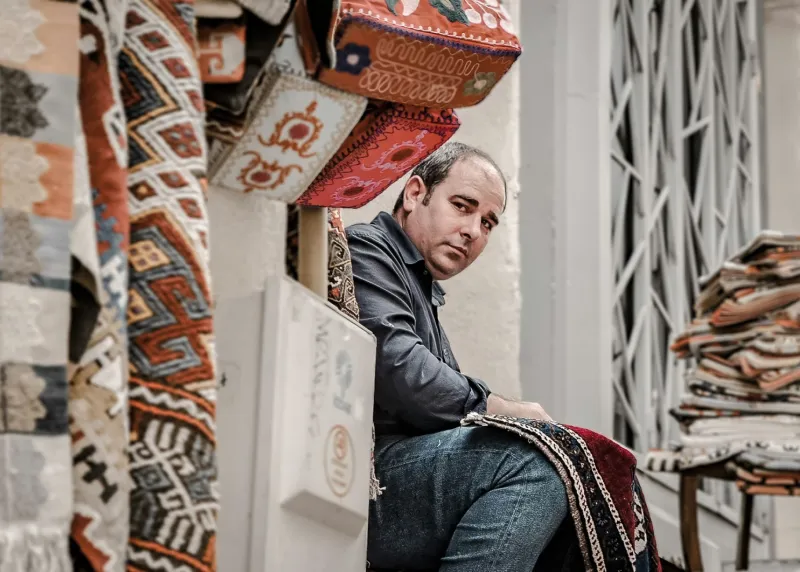
A carpet seller does not open with his best offer, because the opening offer is not really an offer — it is an invitation. The exchange that follows is a structured dance: hospitality first, tea offered before money is mentioned; then a deliberately high anchor, not as an insult but as a starting point for a shared process; then a gradual, face-saving convergence in which both parties are expected to end satisfied.
Compare this to the typical American approach, where the first number on the table tends to define the entire range of discussion. In the bazaar, professionals learn that the opening move matters less than the relationship trajectory. A buyer who haggles respectfully and returns the next day will get a better price than one who hammered a discount out of a stranger in five minutes. Trust, accumulated in minutes of tea and conversation, converts directly into terms.
Reading People Before Reading Spreadsheets
Textbook negotiation emphasizes preparation: know your numbers, know your alternatives, know your walk-away point. All sound advice. But the bazaar teaches a complementary skill that no spreadsheet captures — the ability to read a human being in real time.
Merchants there assess a customer within seconds: where they are from, how serious they are, what they actually want versus what they say they want. And buyers learn to do the same in reverse. Is this merchant's patience genuine or performed? Is the price softening because the seller is motivated, or because the merchandise is? After a few days of daily negotiation, professionals report a heightened sensitivity to tone, pacing, and silence that no lecture hall can induce.
This is the core argument for immersion-based training. Skills sharpen fastest when feedback is immediate and consequences are real. In the bazaar, a misread signal costs you money. A well-timed pause earns you respect. The market is an unforgiving but honest instructor, and the lessons arrive not as notes in a binder but as memory etched by experience.
Why Immersion Outperforms Role-Play
Educational research has long supported what the bazaar demonstrates: experiential learning in authentic environments produces dramatically better retention than simulated exercises. A role-play ends when the facilitator calls time. A bazaar negotiation ends when two people reach an agreement both must honor.
Professionals who complete immersion-based negotiation training in Istanbul consistently describe the difference in similar terms. The seminar taught them what to do; the bazaar taught them who they are when the stakes are real. One participant, a procurement manager from Chicago, put it plainly: back home, she negotiated over email, cushioned by distance. After a week in the market, she found herself reading the hesitations in a supplier's voice that she had previously ignored entirely.
That is the quiet transformation these programs deliver. Not a new framework, but a recalibrated instrument — the professional himself.
Bringing the Bazaar Home
The point of studying in the Grand Bazaar is not to learn to sell rugs. It is to carry its habits back into American boardrooms: open with relationship, anchor generously and without apology, treat the counterpart as a partner in a shared outcome, and understand that the deal is never just the deal — it is the opening position for the next one.
American business culture tends to prize efficiency: get to the number, close the deal, move on. The bazaar, after five and a half centuries, suggests a longer view. The merchants who thrive there are not the most aggressive but the most trusted. Their reputations compound across years of transactions with people who return, and who bring others.
For professionals weighing where to invest in their own development, the lesson is worth considering. Negotiation can be taught from a textbook, but it can only be learned where negotiation actually lives — in the crowded, tea-scented, centuries-old corridors of a market that has outlasted every empire that tried to regulate it.