The Network That Never Sleeps: How Istanbul Builds Professional Connections That Follow You Home

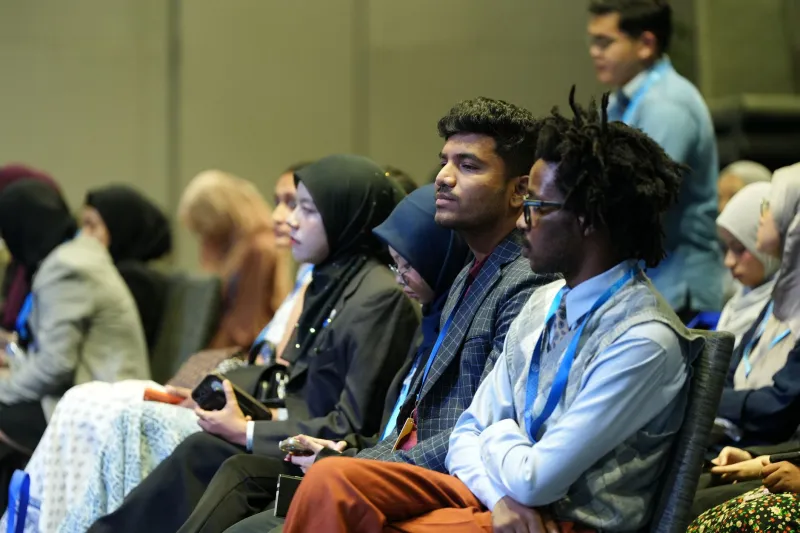
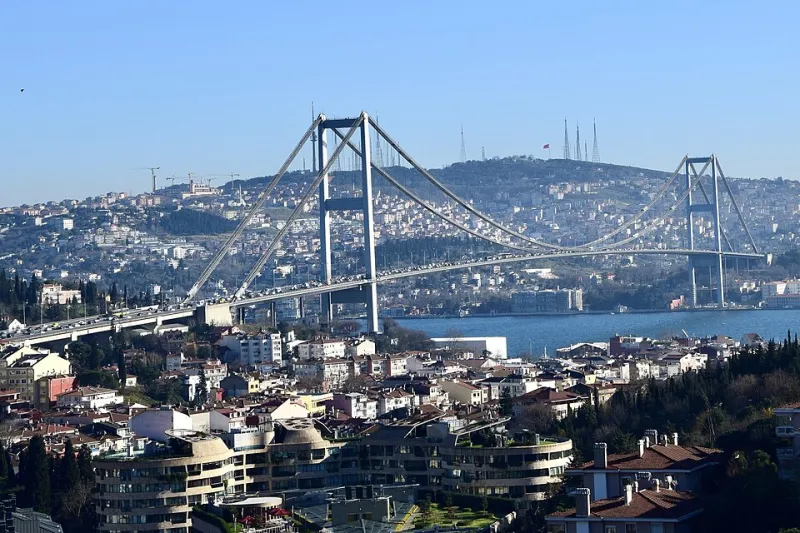
Photo: diverse business professionals networking in Istanbul with Bosphorus view, via thumbs.dreamstime.com
There is a particular moment that many Istanbul Akademisi alumni describe with surprising consistency. It arrives not during their time in Turkey, but months or even years after they have returned to the United States — when a message appears from a former classmate now based in Dubai, or a professional introduction arrives through a contact made during a seminar in Beyoğlu, and suddenly a door opens that no domestic program ever could have unlocked. This is what alumni have come to call the Istanbul Effect: a long-tail phenomenon in which the professional connections built along the Bosphorus continue to generate meaningful career outcomes long after graduation.
Understanding why this happens requires appreciating what makes Istanbul structurally different from any American city as a site for professional education.
A City Built for Connection
Istanbul is not merely geographically positioned between continents — it is functionally positioned between worlds. On any given week, the city hosts business delegations from Frankfurt, Riyadh, Nairobi, and Seoul. Its professional class is multilingual by necessity and multicultural by design. When American professionals enroll in programs at Istanbul Akademisi, they do not simply study alongside Turkish peers. They sit in classrooms with professionals from across the European Union, the Gulf Cooperation Council states, Central Asia, and Sub-Saharan Africa — a cross-section of the global economy that no single US metropolitan area can organically assemble.
This matters enormously when it comes to the quality and diversity of professional networks. Research consistently demonstrates that career advancement is driven less by the strength of close relationships and more by what sociologist Mark Granovetter famously called "weak ties" — acquaintances and peripheral contacts who move in different circles and can therefore introduce opportunities that one's immediate network cannot. Istanbul, by its very nature, is a generator of high-value weak ties.
Why Traditional US Programs Fall Short
American MBA programs and professional development courses are exceptional in many respects. They produce rigorous thinkers, credentialed specialists, and well-connected graduates. However, their networks, however prestigious, tend to be geographically and professionally concentrated. A graduate of a top-tier East Coast business school will likely emerge with a powerful network — but one that skews heavily toward North American finance, consulting, and technology sectors.
For an American professional whose career increasingly intersects with global supply chains, international clients, or cross-border expansion, this concentration is a structural limitation. Istanbul Akademisi's programs are designed with precisely this gap in mind. By situating professional training within one of the world's most genuinely cosmopolitan cities, the institution enables a form of network-building that is lateral, global, and industry-diverse in ways that purely domestic programs cannot engineer.
Alumni frequently report that their Istanbul cohort includes logistics professionals from Eastern Europe, fintech entrepreneurs from the Caucasus, and healthcare administrators from North Africa — professionals whose industries and geographies intersect with American business in consequential ways, yet who would never appear in a conventional US classroom.
The Mechanics of Lasting Connection
Building a global network is not simply a matter of proximity. Istanbul Akademisi's curriculum is deliberately structured to foster meaningful professional relationships rather than superficial acquaintance. Collaborative project work, cross-disciplinary seminars, and structured mentorship with Istanbul-based industry leaders all serve to deepen the bonds formed during study. The city itself functions as a kind of extended classroom — shared experiences navigating Istanbul's bazaars, its ferry routes across the Bosphorus, and its layered historical neighborhoods create the kind of informal, durable social bonds that purely transactional networking events never produce.
There is also a cultural dimension to consider. Turkish professional culture places significant emphasis on hospitality, reciprocity, and long-term relationship investment — values that tend to produce connections characterized by genuine mutual support rather than transactional exchange. American professionals who engage authentically with this culture often find that their Istanbul contacts become among the most reliable and generous in their broader networks.
What the Data Suggests
While comprehensive longitudinal studies of international professional networks remain relatively rare, the anecdotal evidence from Istanbul Akademisi alumni is remarkably consistent. Professionals who completed programs in Istanbul report not only a broader international network but a more actively engaged one. Former classmates make introductions, share market intelligence, and collaborate on projects at higher rates than alumni from comparable domestic programs — a pattern that appears linked to the intensity and authenticity of the relationships formed during study.
This network effect is particularly pronounced in sectors experiencing rapid internationalization: technology, renewable energy, logistics, and professional services. In these fields, having a trusted contact in Ankara, Warsaw, or Almaty is not a novelty — it is a competitive advantage.
The Long Game
For American professionals evaluating their career development options, the calculus around international study has traditionally centered on cost, credential recognition, and time away from domestic opportunities. These are legitimate considerations. However, they risk underweighting what may be the most durable return on investment that international study offers: the permanent expansion of one's professional world.
The Istanbul Effect is, at its core, a compounding phenomenon. The connections made during a semester or a professional program in Istanbul do not depreciate the way a single industry conference or a domestic workshop might. They grow in value as the professionals involved advance in their careers, expand their own networks, and encounter new opportunities that require exactly the kind of global reach that an Istanbul-forged connection can provide.
For American professionals willing to think beyond the familiar geography of US-based education, Istanbul Akademisi offers something that no domestic program can fully replicate: a city that has been connecting people across continents for centuries, now channeled into a rigorous professional development experience designed for the demands of a genuinely global career.