Beyond the Classroom: How Istanbul's Global Student Network Is Opening Doors American Professionals Never Knew Existed
When Marcus Delgado, a supply chain consultant from Denver, enrolled in a logistics management program at an Istanbul-based academy in 2022, he expected to return home with a sharper skill set. What he did not expect was a business partner in Riyadh, a distribution contact in Warsaw, and an introduction to a venture capital firm operating across Southeast Asia—all cultivated over the course of a single intensive semester.
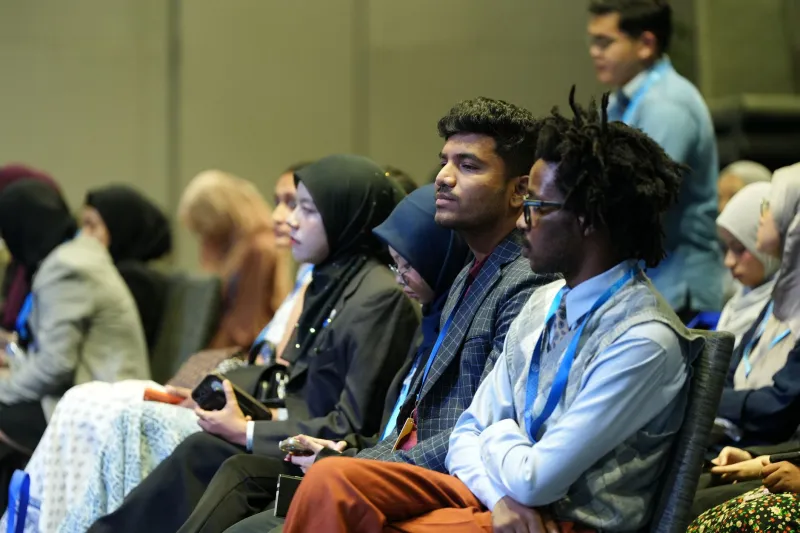
"I've attended conferences in Chicago, New York, and San Francisco," Delgado said. "But nothing compared to sitting in a seminar room in Istanbul with professionals from seventeen different countries, all working through the same business problems I was facing."
Delgado's experience is far from exceptional. Across Istanbul's growing ecosystem of professional academies, American alumni are reporting that the city's unique geographic and cultural position—straddling Europe, Asia, and the Middle East—produces a quality of international networking that simply cannot be replicated through LinkedIn connections or virtual summits.
A City Built for Cross-Cultural Commerce
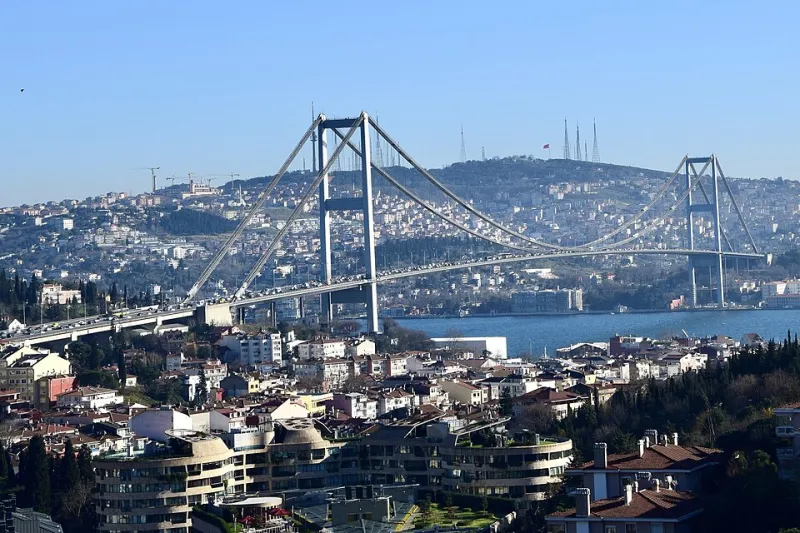
Istanbul's identity as a meeting point for civilizations is not merely historical. Today, the city functions as a genuine commercial corridor, attracting professionals, entrepreneurs, and executives from across the European Union, Central Asia, the Gulf states, and North Africa. When American students arrive at institutions like Istanbul Akademisi, they enter an environment where international collaboration is not a program feature—it is an ambient reality.
This matters enormously for professional networking. Research consistently shows that the strongest business relationships are forged through shared experience rather than transactional exchange. Study groups, late-night project sessions, weekend excursions along the Bosphorus—these informal interactions create the kind of trust that business cards and Zoom calls rarely achieve.
For American professionals accustomed to networking within their domestic industry bubbles, this exposure represents a genuine paradigm shift. The colleague reviewing your financial model might be a former investment banker from Frankfurt. The peer critiquing your marketing strategy might be a retail executive from Karachi. These are not hypothetical encounters. They are the daily texture of studying in Istanbul.
Real Relationships, Real Results
The professional dividends of Istanbul-forged networks are increasingly well-documented among American alumni communities.
Take the case of Jennifer Osei, a healthcare technology entrepreneur from Atlanta who completed a digital transformation certificate in Istanbul three years ago. Within eighteen months of returning to the US, she had secured a pilot partnership with a hospital network in Jordan—a connection she traces directly to a classmate she met during a group case study in Istanbul. That partnership has since expanded into a multi-year contract and introduced her firm to procurement officers across the broader Middle East market.
"There is no cold outreach strategy in the world that would have opened those doors as quickly," Osei said. "We had a shared experience. We had trust. That changes everything about how a business conversation begins."
Similar outcomes appear in sectors ranging from technology and finance to sustainable agriculture and media production. American alumni frequently describe a pattern: a connection made in Istanbul becomes a referral, which becomes an introduction, which becomes an opportunity that would have been structurally invisible from within the United States.
The Structural Advantage of Istanbul's Academic Community
What distinguishes Istanbul's international student community from the cosmopolitan mixing that occurs in, say, London or New York is the proportional diversity of its participants. American students often constitute a minority within their cohorts—sometimes a small one. This dynamic, counterintuitive as it may seem, is precisely what makes the experience so professionally transformative.
In environments where Americans are one voice among many rather than the dominant cultural presence, they are compelled to listen differently, negotiate differently, and build relationships differently. These are not soft skills in the abstract. They are the precise competencies that determine whether an American firm succeeds or stalls when it attempts to operate across borders.
Institutions such as Istanbul Akademisi are deliberately structured to amplify this effect. Cohort compositions are curated for geographic breadth. Collaborative assignments are designed to require genuine cross-cultural problem-solving. Guest lecturers frequently include executives and policymakers from Turkey's extensive trade networks across the Balkans, the Caucasus, and the Arab world.
Networking That Outlasts the Program
Perhaps the most remarkable characteristic of Istanbul-based professional networks is their durability. Alumni from programs at Istanbul Akademisi consistently report maintaining active professional contact with international classmates years after completing their coursework.
This persistence is partly a function of the intensity of the shared experience. Students who navigate a foreign city together, who work through complex academic material in a second or third language, who share meals in neighborhoods that feel genuinely unfamiliar—these individuals form bonds that routine professional acquaintances simply do not.
It is also a function of the geographic architecture of Istanbul's alumni community. Because graduates scatter across dozens of countries, the network functions less like a local alumni chapter and more like a distributed global infrastructure. An American professional seeking an entry point into the Turkish market, the German startup ecosystem, or the Gulf's sovereign wealth landscape often finds that a single message to an Istanbul classmate is the most efficient path available.
What This Means for American Career Strategy
For American professionals evaluating their long-term career positioning, the networking dimension of an Istanbul academic program deserves serious consideration alongside the credential itself.
The global economy increasingly rewards professionals who can operate fluently across cultural and geographic boundaries. Domestic networks, however extensive, provide limited leverage when a company is pursuing international expansion, seeking foreign investment, or attempting to navigate regulatory environments in unfamiliar markets. The professionals who hold relationships on the ground—relationships built on genuine shared experience—hold a structural advantage that no amount of remote outreach can easily replicate.
Istanbul, positioned at the intersection of some of the world's most dynamic emerging markets, offers American professionals a rare opportunity to build exactly that kind of network. The classroom is the starting point. The relationships that develop around it may well define the trajectory of an entire career.