Why Cross-Cultural Leadership Training in Istanbul Outperforms Domestic Executive Programs
Photo: Samuel Atkins Eliot, editor. Massachusetts Biographical Society (Boston, MA)., Public domain, via Wikimedia Commons
For decades, American corporations have treated domestic MBA programs and Silicon Valley leadership retreats as the gold standard for executive development. That assumption is quietly being challenged—not by another American institution, but by a city straddling two continents, where East meets West in the most literal geographic sense imaginable.
Istanbul is emerging as a serious destination for cross-cultural leadership training, and the companies sending their managers there are not doing so out of novelty. They are responding to a measurable gap in how traditional programs prepare leaders for the realities of managing global teams.
The Limitation Domestic Programs Cannot Solve
Ask any senior HR director at a Fortune 500 company what their most persistent leadership development challenge is, and the answer is often the same: American managers struggle to lead effectively across cultural boundaries. They may excel at strategic thinking, financial modeling, or product development, but when placed in charge of teams spread across Istanbul, Jakarta, Nairobi, and São Paulo, something breaks down.
Domestic programs can teach cultural awareness as a concept. They can assign case studies, host guest speakers, and run diversity workshops. What they cannot do is place a manager in a genuinely foreign environment and require them to function—professionally and personally—within it. That is precisely what Istanbul offers.
The city's position as a historical crossroads of civilizations is not merely a tourism talking point. It is a living, breathing reality that shapes every professional interaction. Business meetings in Istanbul routinely involve participants from Turkey, Central Asia, the Middle East, Eastern Europe, and beyond. Relationship-building follows different timelines than American professionals expect. Negotiation styles reward patience and indirect communication in ways that can feel counterintuitive to someone trained in Silicon Valley's move-fast culture.
What American Executives Are Actually Learning
Consider the experience of a regional operations director from a mid-sized logistics firm based in Atlanta. After completing a six-week leadership immersion program through an Istanbul-based academy, she returned to her role managing supplier relationships across twelve countries with a fundamentally different approach to trust-building.
"In the US, we tend to treat relationship-building as something that happens alongside the business conversation," she noted in a post-program debrief shared with her company's leadership team. "In Istanbul, I learned that for many of my international partners, the relationship is the business conversation. Rushing past it isn't efficiency—it's disrespect. That single shift changed how I approach vendor negotiations globally."
This kind of experiential recalibration is precisely what Istanbul-based programs are designed to produce. Participants are not simply attending lectures on intercultural communication theory. They are navigating real business environments, building networks with Turkish professionals and international peers, and encountering the friction—and richness—of genuine cultural difference on a daily basis.
The Competitive Intelligence Advantage
Beyond interpersonal skills, there is a strategic intelligence dimension to Istanbul training that domestic programs cannot replicate. Turkey sits at the intersection of markets that American companies are increasingly prioritizing: the Gulf states, the Caucasus, the Balkans, and North Africa. Managers who have spent time in Istanbul do not just understand these markets academically—they have professional contacts within them.
A technology sales director from a Chicago-based SaaS company enrolled in a business development intensive at Istanbul Akademisi specifically to build regional market knowledge ahead of a planned MENA expansion. Within eighteen months of completing the program, his division had closed partnership agreements in three countries where the company had previously had zero foothold. He credits the relationships formed during the program—with Turkish entrepreneurs, regional distributors, and fellow international participants—as the foundation of that growth.
This is the network effect that American companies are beginning to price into their training investments. A domestic leadership program might strengthen a manager's internal network. An Istanbul program extends that network across two continents.
Why Istanbul Specifically?
Other international cities offer multicultural environments. What makes Istanbul distinctive as a training destination is the particular combination of factors it presents.
First, the professional culture is sophisticated and internationally oriented without being homogeneous. Istanbul's business community has deep experience engaging with both Western and Eastern counterparts, which means American participants encounter genuine complexity rather than a simplified or Westernized version of international business.
Second, the city's educational infrastructure has matured significantly. Institutions like Istanbul Akademisi offer structured programs designed specifically for international professionals, with curricula that balance immersive cultural experience with rigorous professional development content. Participants are not simply tourists with business cards—they are enrolled in programs with clear learning objectives and measurable outcomes.
Third, the cost differential relative to comparable programs in Western Europe or North America means that companies can send more managers, more frequently, without exhausting their development budgets.
Building the Culturally Fluent Organization
The companies seeing the greatest return on Istanbul training investments are those treating it not as a one-off experience for individual high-potentials, but as a component of a broader organizational strategy to build cultural fluency at scale.
When a manager returns from an immersive Istanbul program, they bring back more than personal growth. They bring back frameworks, contacts, and a credibility with international colleagues that changes how the entire team operates. Other team members observe the shift. Conversations about international strategy become more grounded. The organization's collective intelligence about operating across cultures quietly deepens.
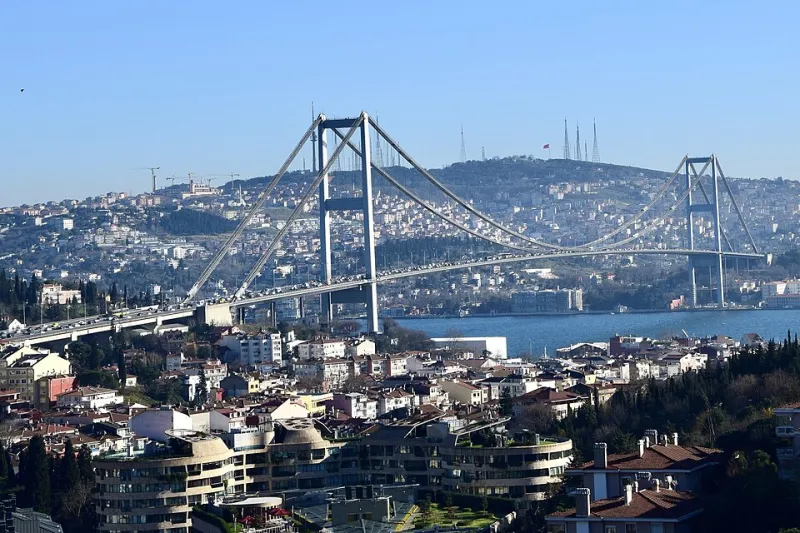
This is the advantage that domestic programs, however well-designed, structurally cannot provide. Cultural fluency is not a concept to be learned. It is a capability to be developed through experience—and Istanbul, where the Bosphorus has connected continents for millennia, may be the most effective place on earth to develop it.
For American companies serious about competing in a genuinely global economy, the question is no longer whether cross-cultural leadership development matters. The question is whether the training environment is equal to the challenge. Increasingly, the answer points east—to a city where every professional interaction is itself a masterclass in navigating difference.