Seven Istanbul Rituals That Quietly Teach You How to Learn
Every serious learner eventually confronts the same problem: the modern study routine is a mess of tabs, timers, and half-finished courses. The tools have multiplied; the method has not improved.
Istanbul offers an unusual corrective. The city's oldest practices — some centuries old — happen to align with what cognitive science now says about attention, memory, and mastery. You do not need a plane ticket to borrow them.
1. The Sema Ceremony: Single-Point Focus
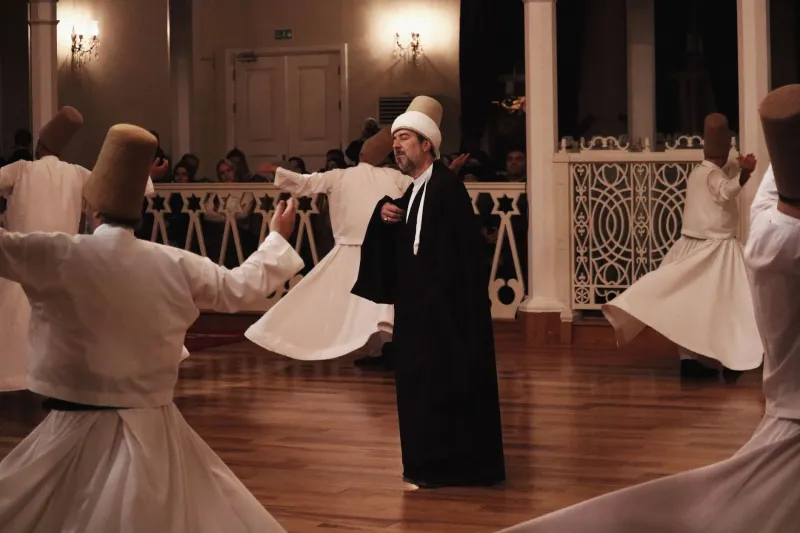
Watch the whirling dervishes and you see something radical by modern standards: total absorption in one motion, sustained for an hour. Neuroscientists call this focused-attention meditation, and research links it to improved sustained concentration.
Your version: Before each study block, spend two minutes on a single anchor — your breath, a candle, the sound of the room. Then begin. The ritual marks a boundary your brain learns to respect.
2. The Hammam: Sequenced Transitions
The hammam works because nothing is skipped. Warmth, steam, scrub, rinse, rest. Each stage prepares the next. Compare this to how most professionals lurch from a stressful meeting straight into a study session, carrying the residue with them.
Your version: Build a five-stage entry ritual for learning time: close all apps, write down what you're about to study, stretch, pour water, open the material. Same sequence, every time.
3. The Grand Bazaar Apprenticeship: Watch First, Do Later
Bazaar craftsmen traditionally spent months observing before touching the goods. Modern learning platforms push the opposite — start producing immediately. But observational learning is a legitimate phase, not procrastination.
Your version: For any new skill, spend your first sessions purely studying expert work — annotated code, edited writing, recorded sales calls — before attempting your own.
4. The Tea House: Learning as Conversation
Istanbul's çay bahçeleri run on a simple engine: people talking for hours, listening as much as speaking. Study after study shows that explaining material aloud — the protégé effect — beats re-reading by a wide margin.
Your version: Schedule a weekly 30-minute call where you teach someone what you learned that week. No slides. Just talk.
5. The Call to Prayer: Structured Rhythms of Pause
The city's day is punctuated by the ezan — five deliberate pauses that interrupt whatever you're doing. Counterintuitively, these interruptions improve the work between them. Spacing effects in memory research confirm it: distributed practice with genuine breaks outperforms marathon sessions.
Your version: Set five fixed daily breaks. Stand up, leave the screen, let the material consolidate. Treat the pause as part of the method, not a lapse in discipline.
6. The Ferry Commute: Protected Idle Time
Crossing the Bosphorus, Istanbullus do something Americans find almost uncomfortable: nothing. No option to be anywhere else. Default-mode network research suggests these idle stretches are when the brain consolidates learning and generates connections.
Your version: Take one walk daily with no podcast, no phone, no destination. The insights that surface are not accidents; they are processing.
7. The Meze Table: Small Portions, Many Courses
A meze spread never serves one large dish. It offers many small ones, each distinct. Cramming is the anti-meze — one oversized serving, poorly digested. Interleaving different but related topics, the research shows, builds far more flexible knowledge.
Your version: Break each study session into three 25-minute blocks on three related-but-different topics. The switching feels harder. That difficulty is the learning.
The Common Thread
Notice what all seven practices share: they impose structure on time and attention from the outside, so willpower doesn't have to carry the load. That is the quiet genius of Istanbul's traditions — and the reason the city has been teaching people how to learn for longer than most of our institutions have existed.