The Best of Both Worlds: How Hybrid Learning Programs in Istanbul Are Letting American Professionals Grow Without Stepping Away

Photo: Shixart1985, CC BY 2.0, via Wikimedia Commons
For most working Americans, the idea of enrolling in a professional program abroad has historically carried an implicit ultimatum: commit fully, or don't bother. The logistical calculus—extended leave from work, disrupted family schedules, suspended income—made international academic experiences the exclusive domain of those in transitional life phases. Recent graduates. Early retirees. Those between jobs.
That calculus is changing.
A new model of professional education, pioneered by forward-thinking institutions in cities like Istanbul, is dismantling the either/or framework that long governed international learning. Hybrid programs—structured around concentrated in-person residencies combined with rigorous online coursework—are enabling American professionals to pursue meaningful academic credentials and genuine cultural immersion without placing their careers on hold.
The results are attracting serious attention from professionals across sectors who previously assumed that international education was simply not compatible with their lives.
Rethinking What "Going to Istanbul" Actually Requires
The core innovation of the hybrid model lies in its reorganization of time. Rather than demanding a continuous multi-month presence abroad, programs structured along hybrid principles compress the in-person component into intensive, high-contact residency periods—typically ranging from two to four weeks—during which students engage in hands-on workshops, mentorship sessions, site visits, and collaborative projects that benefit most from physical presence.
The remaining coursework—lectures, reading, written assignments, group discussions, and assessments—is delivered through well-designed online platforms that accommodate the schedules of working professionals across multiple time zones.
For an American professional based in, say, Seattle or Charlotte, this means requesting a defined block of leave rather than an open-ended absence. It means telling a manager: "I will be in Istanbul for three weeks in October." That is a conversation most employers can accommodate. An indefinite departure is a far more complicated negotiation.
Istanbul Akademisi has been among the institutions developing this approach with particular intentionality, recognizing that the most career-motivated learners are often those with the least flexibility in their existing professional lives.
What the In-Person Residency Actually Delivers
Understanding why the hybrid model works requires appreciating what the in-person residency component is specifically designed to accomplish—and what it deliberately does not attempt to replicate online.
During residency periods, students engage in the kinds of learning that are genuinely diminished by distance: live case analysis with instructors who can respond dynamically to a room's energy, peer collaboration that benefits from physical proximity and spontaneous exchange, cultural immersion that simply cannot be simulated through a screen, and mentorship relationships that deepen through informal conversation over coffee in Karaköy or during an evening walk along the Bosphorus.
These experiences are not incidental to the program's educational value. They are central to it. The intensity of a concentrated residency—where participants are fully present, professionally focused, and geographically removed from their ordinary routines—produces a quality of engagement that semester-long low-intensity contact rarely achieves.
Americans who have completed residency periods in Istanbul frequently describe a cognitive shift that occurs during those weeks. Removed from the ambient noise of their regular professional environments, they find themselves absorbing material more deeply, questioning assumptions more freely, and forming professional relationships more authentically.
Maintaining Career Continuity During the Online Phase
The online component of hybrid programs is not, in well-designed curricula, a lesser substitute for in-person instruction. It is a deliberately structured phase of the learning experience that serves distinct educational purposes while accommodating the professional realities of working adults.
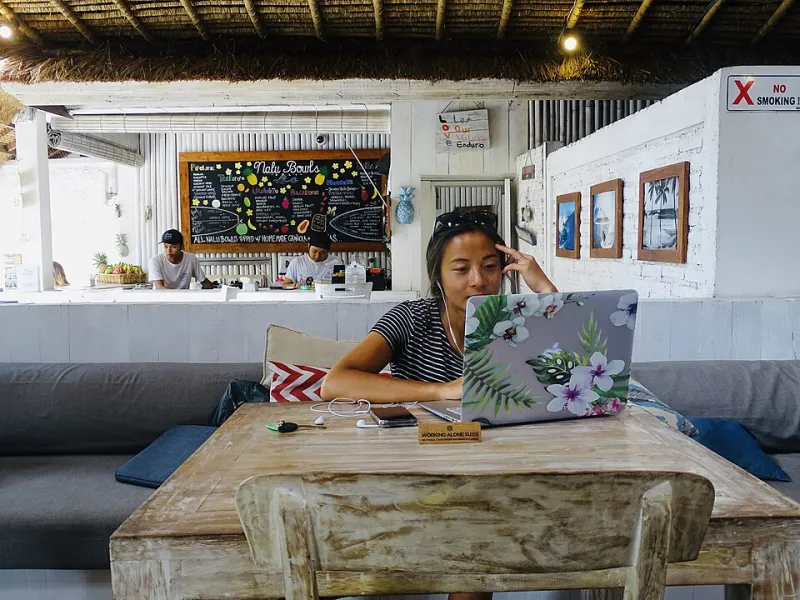
Asynchronous coursework allows students to engage with lectures and readings at hours that fit around their job responsibilities. Discussion forums and collaborative projects connect them with international cohort members across time zones without requiring simultaneous availability. Assessment schedules are structured to be demanding but not incompatible with a forty-hour work week.
Critically, the online phase also provides an extended period for students to apply what they learned during their Istanbul residency within their actual professional contexts. This application-and-reflection cycle—moving between academic frameworks and real workplace challenges—is educationally powerful in ways that purely classroom-based learning cannot replicate.
Several American participants in Istanbul Akademisi's hybrid offerings have described using ongoing online coursework as a kind of intellectual anchor during otherwise demanding professional periods. The program provides structure and forward momentum even when the pressures of their day jobs are at their most intense.
The Cultural Dividend of Concentrated Immersion
One concern American professionals sometimes raise about hybrid models is whether a short residency period can deliver meaningful cultural immersion, or whether it produces only a superficial tourism-adjacent experience.
The evidence from alumni suggests this concern underestimates the density of what concentrated immersion can achieve. Three weeks of full engagement in Istanbul—navigating the city independently, studying alongside professionals from across Europe, Asia, and the Middle East, attending lectures delivered through a genuinely international academic lens—produces cultural exposure that is qualitatively different from, and in many respects more professionally useful than, a semester of passive residence.
The key variable is intentionality. Programs designed to maximize cultural learning during residency periods—through structured intercultural workshops, deliberately diverse cohort compositions, and guided engagement with Istanbul's commercial and civic life—can deliver genuine cross-cultural competency within a compressed timeline.
This is not a consolation prize for professionals who couldn't manage a longer stay. For many, the concentrated intensity of a structured residency produces more durable professional insight than a more leisurely extended engagement would have.
A Model Built for Where Professional Education Is Heading
The hybrid learning model emerging in Istanbul reflects a broader shift in how serious professional education is being reconceived for the realities of modern careers. The assumption that depth requires extended physical displacement is giving way to a more nuanced understanding of how adults learn most effectively.
For American professionals navigating demanding careers, family obligations, and financial considerations, the hybrid model offers something genuinely valuable: a path to international academic credentials, cross-cultural professional networks, and the transformative experience of learning in one of the world's most historically and commercially significant cities—without the ultimatum that once made such opportunities feel out of reach.
Where knowledge meets the Bosphorus, it turns out, does not always require an extended stay. Sometimes, it requires only the right program and the willingness to show up fully—for the weeks that matter most.