The Three-Month Reset: Why American Professionals Are Choosing Istanbul for Their Most Important Career Investment

Photo: Chapman, J. G. (John Gadsby), 1808-1889, No restrictions, via Wikimedia Commons
Sometime in the past few years, a particular kind of decision started showing up with unusual frequency among American professionals in their mid-careers. It is not a resignation letter, exactly — though it sometimes resembles one. It is not a vacation, though it involves leaving home. It is something more intentional: a three-month period spent in Istanbul, combining structured education, professional networking, and the kind of deliberate reflection that busy American careers rarely permit.
The professionals making this choice are not recent graduates searching for direction. They are finance managers in their early forties, software engineers with a decade of experience, creative directors who have built solid careers and now sense — correctly — that the next chapter will require something their current environment cannot provide. They are choosing Istanbul with purpose, and the results are beginning to attract attention.
Why Three Months, and Why Istanbul
The duration is not arbitrary. Career development researchers have long noted that meaningful skill acquisition and professional reorientation require a sustained period of focused effort — not a weekend workshop, not a two-week boot camp, but a genuine commitment of time and attention. Three months represents a threshold at which new habits form, new networks deepen, and new professional identities begin to take shape.
The choice of Istanbul, meanwhile, reflects a convergence of practical and strategic factors that few other global cities can match.
On the practical side, Istanbul's cost of living relative to major American cities is striking. A professional who might spend $8,000 to $12,000 per month maintaining a lifestyle in New York or San Francisco can live comfortably in Istanbul — including quality accommodation, meals, transportation, and entertainment — for a fraction of that figure. When that cost differential is applied across a three-month period, the financial calculus of a sabbatical shifts considerably.
On the strategic side, Istanbul offers something that cost alone cannot explain: a genuinely distinctive educational and professional ecosystem. Programs at Istanbul Akademisi draw students and practitioners from across Europe, the Middle East, Central Asia, and increasingly North America, creating a networking environment with rare geographic and professional breadth.
Profiles in Reinvention
The range of professionals making this transition defies easy categorization, but several patterns emerge.
Danielle R., 38, spent eleven years in investment banking in Boston before arriving in Istanbul for a focused three-month program in financial technology and digital assets. Her decision was not driven by dissatisfaction with her career, but by a clear-eyed assessment of where her industry was heading. "I could see the landscape shifting, and I knew that staying current was going to require more than reading industry reports," she explained. "I needed to actually be in an environment where people were building the next version of finance."
Her Istanbul sabbatical included coursework at Istanbul Akademisi, attendance at fintech industry events, and regular sessions with a cohort of professionals from Turkey, Germany, and the UAE who were working on similar problems from different angles. She returned to Boston with a network spanning four countries and a specialization that positioned her for a senior role she had not anticipated when she left.
For Kevin M., 44, a senior UX designer from Austin, the motivation was different. After two decades in tech, he was less interested in adding credentials than in fundamentally rethinking his relationship to his work. Istanbul, he said, provided the distance — both literal and psychological — that made genuine reflection possible.
"There is something about being in a city with four thousand years of history that recalibrates your sense of urgency," Kevin said. "The problems that felt enormous in Austin started to look more manageable. And the problems I had been ignoring — questions about what I actually wanted from my career — finally had space to surface."
He enrolled in a design leadership program at Istanbul Akademisi, not because the curriculum was unavailable elsewhere, but because the environment in which he was studying it was unlike anything he had experienced at home.
The Cost-Benefit Analysis American Professionals Are Running
For many mid-career professionals, the financial dimension of a three-month Istanbul sabbatical is the deciding factor — and the numbers are often more favorable than expected.
A comparable executive education program at a top-tier US business school can cost between $15,000 and $40,000 in tuition alone, before accounting for housing, lost income, or incidental expenses. Domestic boot camps and intensive certificate programs in fields like data science, product management, or UX design frequently run between $10,000 and $20,000 for programs measured in weeks rather than months.
An Istanbul-based program of equivalent or greater rigor, combined with living expenses for three months, can often be structured for a total cost that falls well below these domestic benchmarks — particularly for professionals who have accumulated savings, negotiated unpaid leave, or arranged freelance work to offset expenses during their time abroad.
Beyond direct cost, professionals consistently cite the quality of the learning environment as a differentiator. Istanbul Akademisi's programs benefit from faculty with international academic credentials and industry experience, and from a student body whose geographic and professional diversity creates a richer context for collaborative learning than many domestic programs can offer.
What Istanbul Adds That a Classroom Cannot
Perhaps the most consistent observation among American professionals who have completed Istanbul sabbaticals is that the city itself functions as part of the curriculum.
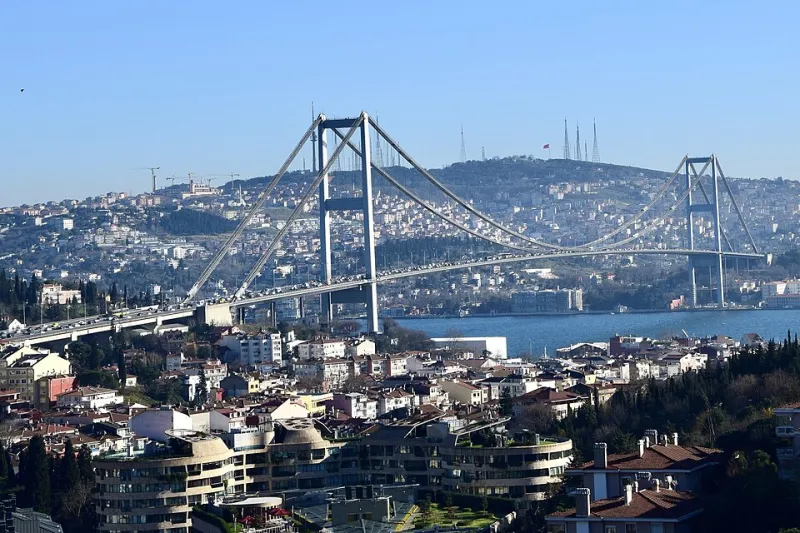
Istanbul's layered identity — simultaneously a modern European metropolis, a historic center of Islamic culture, and a dynamic emerging-market economy — creates a living case study in navigating complexity. Professionals who spend three months genuinely engaged with this environment develop an adaptability and a tolerance for ambiguity that translates directly into professional effectiveness.
For those in industries where global exposure is increasingly a prerequisite rather than a differentiator, this experiential dimension of an Istanbul sabbatical may ultimately prove more valuable than any specific credential earned.
Planning a Sabbatical That Works
Professionals considering this path benefit from approaching it with the same rigor they would apply to any significant career investment. That means identifying specific learning objectives before arrival, selecting programs aligned with those objectives, and building in structured time for reflection and integration — not simply accumulating experiences.
Istanbul Akademisi offers advising resources specifically designed to help prospective students from the US structure their time in Istanbul for maximum professional impact, including guidance on program selection, housing, and professional community engagement.
The three-month Istanbul sabbatical is not a retreat from a career. It is, for a growing number of American professionals, the most strategic investment they have ever made in one.