Pass the Meze, Not the Blame: Persuasion Lessons from Istanbul's Meyhane Tables
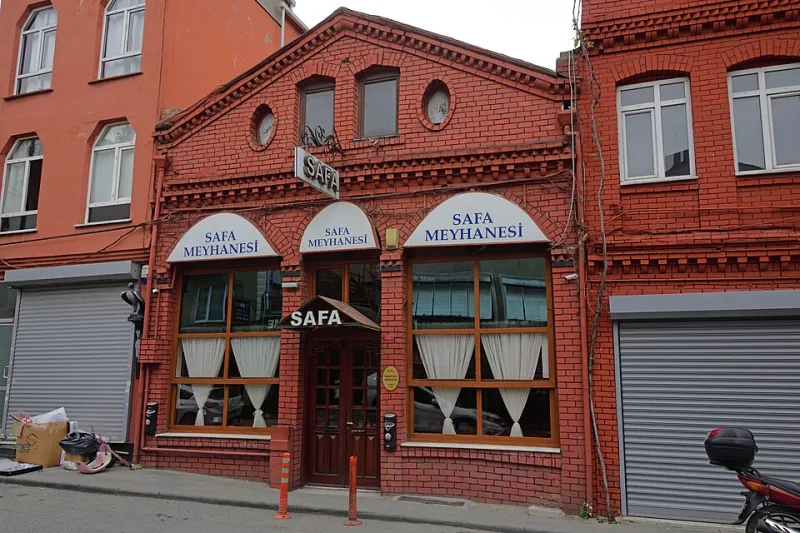
Photo: Dosseman, CC BY-SA 4.0, via Wikimedia Commons
American professionals are often told that the key to persuasion is confidence: make the case, control the room, and do not back down. That advice can win an argument and lose a relationship. In Istanbul's meyhanes — the taverns where friends and colleagues gather for long dinners of meze, raki, and conversation — disagreement is not avoided. It is expected. Yet the argument rarely becomes personal. The table has rituals that keep conflict inside the boundary of hospitality. For US teams struggling with polarization, those rituals are worth studying.
The Table as a Forum
A meyhane is not a debating society. It is a social institution. The table fills with small plates, the glasses are refilled, and the conversation moves in waves. Someone tells a story. Someone else disagrees. The disagreement is often spirited, even theatrical. But the host keeps the table hospitable, and the shared meal keeps the participants aware that they are guests as much as opponents.
The result is a particular kind of persuasion. It is not the persuasion of a sales pitch or a keynote. It is the persuasion of a long conversation in which people test ideas, tease each other, change their minds partially, and leave with the relationship intact. In American workplaces, where disagreement often happens in text, on video calls, or in meetings with a clock, the meyhane offers a different tempo.
The Rituals That Keep Disagreement Civil
Several rituals do the work.
Shared context. The meal comes first. People eat, drink, and settle in before the argument begins. Shared context lowers the sense that the other person is an adversary. In teams, shared context can be as simple as a few minutes of personal conversation before a hard decision.
Turn-taking. Meyhane conversation has a rhythm. People interrupt, but they also yield. The table rewards good storytelling and punishes monologues. Teams can borrow this by using structured rounds: each person speaks once before anyone responds.
Humor with boundaries. Teasing is common, but it is usually aimed at behavior, not identity. The difference matters. Humor can release tension, but it can also wound if it crosses into personal attack. The meyhane works because the boundaries are understood.
Argument as performance. In a meyhane, a strong argument is often appreciated even by the person who disagrees with it. The argument is a performance of reasoning, not a declaration of identity. That distinction makes it easier to change one's mind without losing face.
The host as guardian. The host does not decide who is right. The host keeps the table functioning: refills glasses, invites quiet people in, and redirects the conversation when it becomes harsh. Teams need hosts, not just moderators.
A closing ritual. The end of the meal matters. A final toast, a thank-you, or a shared walk back to the street signals that the disagreement was contained. Without a closing ritual, conflict can linger.
Why US Teams Polarize Faster
American professional discourse often rewards speed and certainty. Text-based communication strips out tone. Meetings compress nuance. Performance reviews and promotion decisions can make people afraid to be wrong. The result is a conversation culture that treats disagreement as a threat rather than a tool.
Polarization also has a structural cause. When teams lack shared context, shared rituals, and shared time, every disagreement becomes a negotiation over scarce resources: credit, attention, influence. The meyhane works because the table is not scarce. There is time, food, and a host who protects the social fabric.
A Meyhane-Inspired Playbook
US professionals can adapt the meyhane method without importing the raki. The first move is to set the table. Before a difficult conversation, create a shared frame: why the decision matters, who is affected, and what a good outcome looks like. Hospitality in this sense is not decoration. It is context.
The second move is to separate the idea from the person. Use language that critiques the proposal, not the proposer. Ask questions such as What would have to be true for this option to work? rather than Why are you defending this?
The third move is to slow the tempo. Use rounds, pauses, and written reflection. A decision that takes two meetings may be better than a decision that takes two minutes and three months of resentment.
The fourth move is to invite stories before claims. People often persuade through narrative before they persuade through data. A story about a customer, a failed launch, or a near miss can create the shared context that makes a logical argument land.
The fifth move is to license humor carefully. A light comment can defuse tension, but only if the team has norms about what is off-limits. The test is simple: is the joke about the problem or about the person?
The sixth move is to appoint a host. The host does not need to be the manager. The host needs to be someone who can read the room, invite quiet voices, and call a pause when the conversation turns corrosive.
The seventh move is to end deliberately. Close the meeting with a summary of what was decided, what remains open, and what the team appreciates about the discussion. A closing ritual helps people leave the argument at the table.
Persuasion as Hospitality
The meyhane method is not a technique for winning. It is a technique for staying in the conversation long enough to be changed by it. For American professionals, that may be the most useful persuasion lesson of all. At Istanbul Akademisi, we see this lesson in the city's dinner tables and in its classrooms: the goal is not to defeat the other person. The goal is to keep the table intact while the ideas are tested. Pass the meze, not the blame.