Built Incrementally: How Istanbul's Gecekondu Neighborhoods Model Resilient Teams
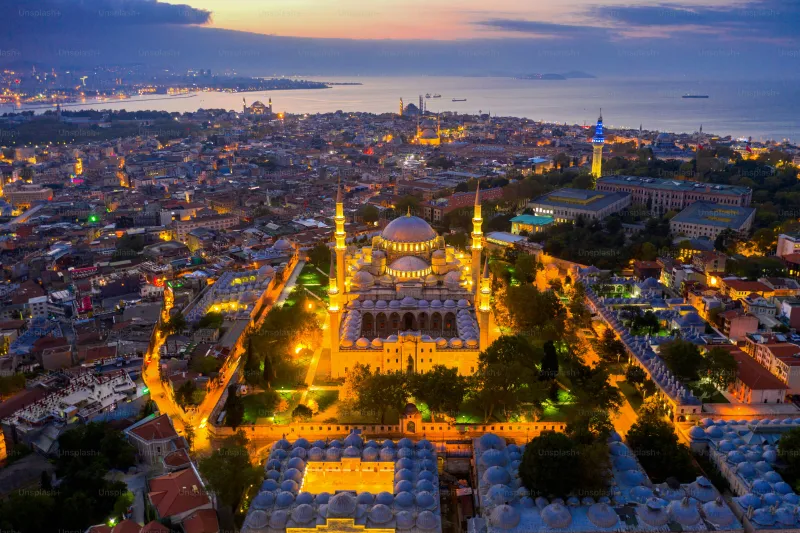
Photo: Istanbul gecekondu neighborhood low-rise houses incremental urban architecture, via plus.unsplash.com
Istanbul's gecekondu neighborhoods are often described in shorthand: informal settlements built by rural migrants, dense clusters of low-rise homes, places that grew faster than the city's plans. The shorthand is not wrong, but it misses the operating logic. Gecekondu means, roughly, built overnight. The name captures the origin story, but the durability came from something else: incremental adaptation. Families built a first room, then a second, then a storefront, then a floor for a married child. They negotiated for water, electricity, and roads. They shared tools, labor, and information. They made provisional arrangements that became permanent through use, negotiation, and time.
For American managers, the gecekondu is not a model to copy. It is a lens. It shows how teams can build resilience when resources are constrained, plans are incomplete, and uncertainty is the normal condition. That is a useful lens for 2026, when many US organizations are asked to do more with less and to adapt faster than their planning cycles allow.
A Neighborhood That Learned by Doing
The gecekondu emerged in Istanbul in the mid-twentieth century as rural migration outpaced formal housing. Migrants occupied unused land and built quickly, often at night. The state's response varied over time, but the long arc was not simply demolition. Many neighborhoods were legalized and upgraded through infrastructure programs and land regularization. Residents used their own labor and social networks to improve their homes and streets. The result was not planned in the way an American subdivision is planned. It was assembled, adjusted, and negotiated.
This history should not be romanticized. Gecekondu neighborhoods have faced real problems: unsafe construction, inadequate services, insecure tenure, and exposure to earthquakes. The point is not that improvisation is always wise. The point is that incremental adaptation can create resilience when formal systems are slow or absent. The gecekondu is a case study in how constraints can drive creativity — and how creativity can become durable only when it is supported by social infrastructure.
The Operating Logic of Resilience
Several features of gecekondu development translate well into team practice.
Incrementalism. Residents did not wait for a complete plan. They built one room, moved in, and improved. Teams often wait for the perfect strategy, the full budget, or the ideal hire. The gecekondu suggests a different sequence: start with a usable minimum, learn from occupation, and add capacity as needs become clear.
Modularity. A gecekondu house is often a collection of additions. Each addition is relatively small and can be adapted. Teams can borrow this logic by designing workflows, roles, and processes as modules rather than monoliths. A modular process is easier to change when conditions shift.
Shared infrastructure. Gecekondu residents depended on shared alleys, water sources, and informal mutual aid. The equivalent for a team is shared documentation, clear decision rights, and norms for asking for help. Without shared infrastructure, individual resourcefulness becomes exhaustion.
Distributed problem-solving. The neighborhood did not wait for a central authority to solve every problem. Residents organized around immediate needs. Teams that distribute problem-solving — and give people permission to act within boundaries — can respond faster than teams that route every issue upward.
Tolerance for provisional solutions. A provisional solution is not a failure. It is a bet that the team will learn enough to improve it. American management culture often punishes provisional work because it looks unfinished. The gecekondu suggests that provisional work can be a stage, not a verdict.
Social capital. The most important infrastructure was often relational. Neighbors knew who had tools, who could wire a socket, who could watch a child. Teams need the same social capital: knowledge of who knows what, who can help, and who can be trusted with a difficult task.
Why US Teams Struggle With the Same Conditions
Many American teams face uncertainty with a planning reflex. They respond to ambiguity by adding more detail to the plan, more approvals, and more documentation. That reflex can be useful, but it can also slow adaptation. When the environment changes faster than the plan, the plan becomes a source of friction.
A second struggle is perfectionism. Teams delay launches because the product, process, or presentation is not yet complete. The gecekondu logic suggests that completeness can be a trap. A usable first version creates feedback that a perfect plan cannot.
A third struggle is individual accountability without shared infrastructure. Organizations ask people to be resourceful, but they do not always give them the documentation, decision rights, or psychological safety to act. Resourcefulness without support becomes burnout.
Translating Gecekondu Logic Into Team Practice
Managers can use the gecekondu as a design metaphor without turning it into a gimmick. The first step is to identify the team's first room: the smallest usable version of a process, product, or service that can be put into practice. Launch it, observe how it is used, and plan the next addition.
The second step is to design for additions. Build workflows and roles that can be extended without a full rebuild. Document interfaces, not just tasks. Make it easy for a new person or a new function to attach to what already exists.
The third step is to invest in shared infrastructure. That means clear norms for communication, a single source of truth for decisions, and explicit permission to ask for help. Shared infrastructure is what turns individual improvisation into team capacity.
The fourth step is to distribute problem-solving. Give people close to the work the authority to make small decisions and the responsibility to report what they learned. This is not abdication. It is a way to increase the number of experiments a team can run.
The fifth step is to make provisional status explicit. Label work as a first version, a pilot, or a temporary arrangement. When people know something is provisional, they are more likely to improve it and less likely to defend it as permanent.
The sixth step is to protect social capital. Create rituals that help people learn who knows what and who can help. A short weekly exchange, a peer directory, or a rotating host for team meetings can strengthen the relational infrastructure that resilience depends on.
The Ethics of the Metaphor
A metaphor is useful only if it is honest. The gecekondu is not a management model, and American managers should not treat it as a cute story about making do. It emerged from housing scarcity and state failure as much as from creativity. The lesson is not that constraints are good. The lesson is that teams can build capability incrementally when they combine resourcefulness with shared infrastructure and a willingness to improve provisional work.
At Istanbul Akademisi, we study these neighborhoods as part of the city's larger lesson about adaptation. The most resilient teams are rarely the ones with the most complete plans. They are the ones that can build a first room, learn from it, and add the next one without losing the people who live there.