What Your Brain Does When You Learn Turkish (And Why It Makes You a Better Strategic Thinker)
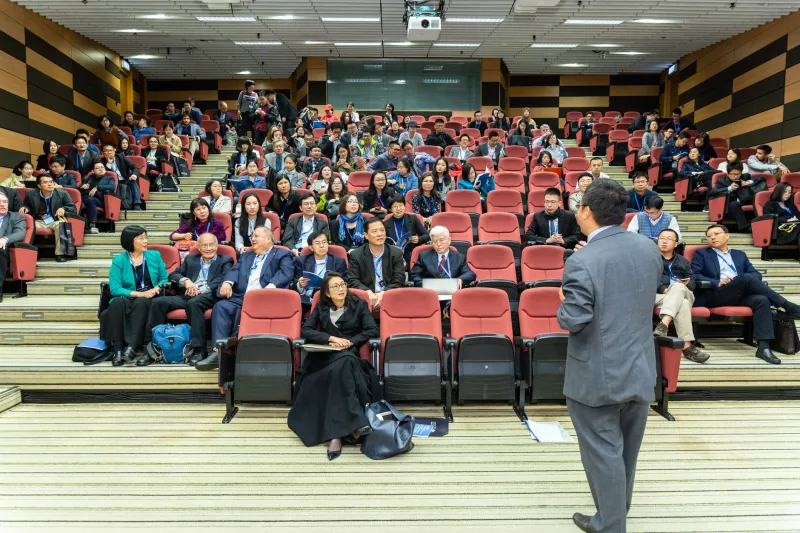
When Marcus Ellison, a supply chain director from Chicago, enrolled in an intensive Turkish language program in Istanbul two years ago, he expected to return home with a useful credential and perhaps a few useful phrases for client meetings. What he did not anticipate was returning with what he now describes as a completely different way of seeing problems.
"I started noticing patterns in data sets that I had previously overlooked," he says. "It sounds strange, but I genuinely believe learning Turkish changed how I think—not just how I communicate."
Ellison is not alone. A growing number of American professionals who have pursued Turkish language instruction—particularly through immersive programs in Istanbul—report similar experiences: improved logical sequencing, a stronger ability to hold multiple variables in mind simultaneously, and a heightened capacity for what cognitive scientists call "divergent thinking." The explanation, it turns out, is rooted firmly in neuroscience.
Why Turkish Is Cognitively Demanding in a Uniquely Productive Way
Not all languages challenge the brain equally. Turkish belongs to the Turkic language family and is classified as an agglutinative language—meaning that grammatical relationships are expressed by attaching suffixes to root words rather than relying on separate prepositions, auxiliary verbs, or word-order conventions. A single Turkish word can convey what English requires an entire sentence to express.
Consider the Turkish word yapamayabileceğimizden, which translates roughly to "because of the fact that we might not be able to do it." That is seven English words encoded into one. To construct or decode such a word, a speaker must hold multiple layers of meaning in working memory simultaneously, process them in the correct logical sequence, and apply consistent rules across an entirely unfamiliar grammatical framework.
For English speakers, whose language relies heavily on word order and whose grammar is comparatively analytic, this represents a genuine cognitive challenge. And cognitive challenges, when met consistently, produce measurable structural change in the brain.
Research published in leading neuroscience journals has demonstrated that bilingual individuals—particularly those who have acquired a second language with a substantially different grammatical architecture—show greater density in regions of the brain associated with executive function, including the anterior cingulate cortex and the left inferior parietal lobe. These are the same regions responsible for managing attention, suppressing irrelevant information, and switching between competing cognitive tasks.
In plain terms: learning a language like Turkish does not simply add a new communication tool. It rebuilds the cognitive machinery that professionals use every single day.
Pattern Recognition as a Professional Skill
One of the most frequently reported benefits among American professionals who study Turkish is an enhanced ability to recognize patterns—in data, in negotiations, in organizational behavior, and in market signals.
This makes neurological sense. Turkish grammar is rule-governed to a remarkable degree. Unlike English, which is riddled with exceptions and irregularities, Turkish follows its own internal logic with extraordinary consistency. Learning to navigate that system trains the brain to search for underlying structure, to resist surface-level noise, and to trust systematic reasoning over intuition alone.
Sarah Okonkwo, a financial analyst from Atlanta who spent three months studying at Istanbul Akademisi, describes the shift in her thinking as "almost algorithmic."
"I became much more disciplined about separating what I actually knew from what I was assuming," she says. "Turkish forced me to be precise. Every suffix matters. You cannot be vague. That discipline followed me back into my work."
Her experience reflects what linguists refer to as "metalinguistic awareness"—the capacity to think consciously about how language constructs meaning. Professionals who develop this awareness tend to communicate with greater precision, identify logical gaps in arguments more readily, and construct more rigorous analytical frameworks.
The Ambiguity Tolerance Dividend
Learning Turkish also cultivates what psychologists call ambiguity tolerance—the ability to function effectively in conditions of incomplete information. This is, arguably, one of the most valuable traits a business leader can possess.
Turkish grammar requires learners to make explicit distinctions that English leaves implicit. For example, Turkish has two distinct past tense forms: one for events the speaker witnessed directly, and another for events the speaker knows only through inference or hearsay. English collapses both into a single past tense. A Turkish speaker must constantly evaluate the epistemological status of their own knowledge—asking, in effect, how do I know this?
For professionals who regularly make decisions under uncertainty—which is to say, virtually all of them—this habit of epistemic rigor is enormously valuable. It builds the kind of intellectual humility that distinguishes good strategic thinkers from overconfident ones.
David Park, a product manager from Seattle who studied Turkish as part of a broader professional development program in Istanbul, credits this particular feature of the language with changing how he frames risk assessments.
"I started qualifying my assumptions in presentations differently," he says. "I became more precise about what I knew versus what I was projecting. My team noticed. My manager noticed. I got promoted six months after I came back."
Why Istanbul Is the Optimal Environment for This Kind of Learning
The cognitive benefits of language acquisition are amplified significantly when learning occurs in an immersive environment—and Istanbul offers an immersive environment unlike any other city on earth.
As a metropolis that has served as a cultural, commercial, and intellectual crossroads for millennia, Istanbul does not merely provide a backdrop for language study. It provides constant, living context. Every interaction—at a market, in a café, during a professional networking event, or while navigating public transit—becomes an opportunity to practice the cognitive flexibility that Turkish demands.
Istanbul Akademisi structures its Turkish language programs to take full advantage of this environment. Instruction is integrated with real-world application from the first week, encouraging students to move between classroom learning and authentic linguistic encounters in a city where those encounters carry genuine stakes. The result is accelerated acquisition and, with it, accelerated cognitive development.
The programs are designed specifically with working professionals in mind. Schedules are structured to accommodate participants who are managing ongoing professional responsibilities, and the curriculum is calibrated to connect linguistic development with practical business application.
Rethinking What "Professional Development" Actually Means
The conventional model of professional development in the United States tends to focus on the acquisition of discrete skills: project management frameworks, financial modeling techniques, leadership communication strategies. These are valuable. But they operate largely within the existing cognitive architecture of the professional who learns them.
Language acquisition—particularly the acquisition of a structurally demanding language like Turkish—operates differently. It does not add tools to an existing framework. It renovates the framework itself.
For American professionals who feel that conventional training programs have delivered diminishing returns, or who are looking for an edge that cannot be easily replicated by a competitor who attends the same certification course, the neuroscience makes a compelling case.
The bilingual brain is not simply a brain that knows more words. It is a brain that thinks differently—more flexibly, more precisely, and with a greater capacity for the kind of structured creativity that modern business demands.
At Istanbul Akademisi, where the city itself serves as both classroom and laboratory, that transformation is available to anyone willing to engage with it seriously. The Bosphorus, after all, has always been a place where different worlds meet—and where those willing to cross it return changed in ways they did not fully anticipate.